

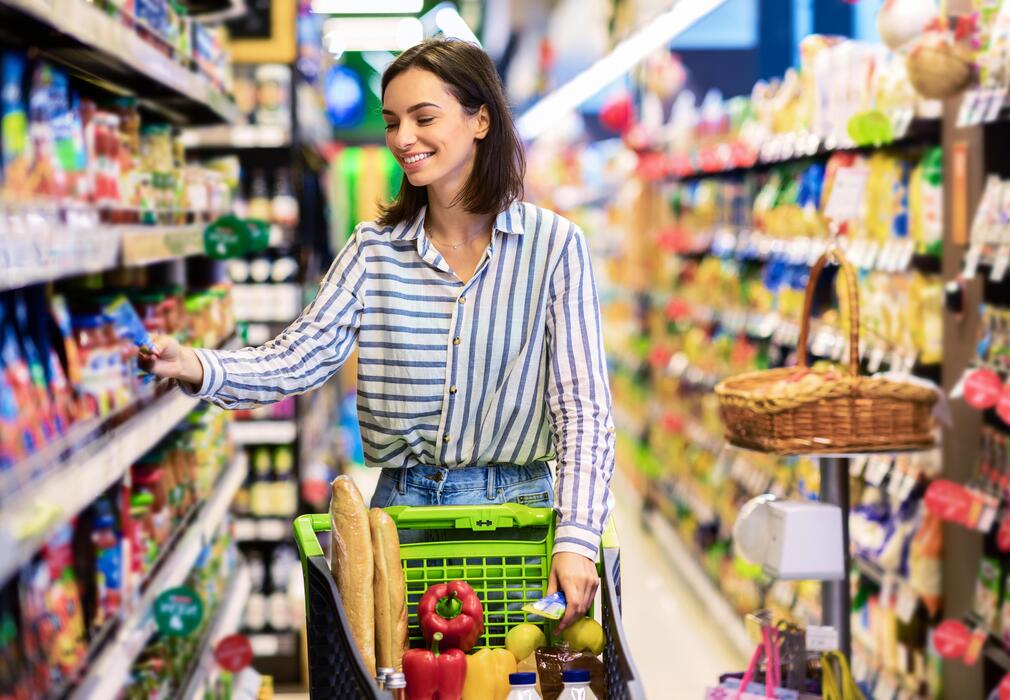

Finding the cheapest supermarket in the UK is more complicated than simply asking which retailer has the lowest price on one product.
Prices change. Promotions come and go. Loyalty schemes can reduce the cost of a basket, while the range of products available differs considerably between discount supermarkets and larger full-range retailers.
However, the latest independent comparison provides a clear current answer.
Aldi was the cheapest major UK supermarket in Which?’s latest comparison for June 2026, with Lidl a very close second. Aldi’s 95-item basket cost £163.34, compared with £164.79 for Lidl when loyalty discounts were included.
Among the mainstream full-range supermarkets included in the comparison, Asda was the cheapest at £190.39.
The results come as UK food price inflation continues to ease. The Office for National Statistics reported that food and non-alcoholic beverage prices rose by 1.7% in the year to June 2026, down from 2.2% in May.
But a lower rate of inflation does not mean that grocery prices have returned to previous levels. For millions of households, choosing where to shop remains an important part of managing the weekly budget.
Table of Contents
- Which is the cheapest supermarket in the UK in 2026?
- Aldi vs Lidl: which is cheaper?
- Full UK supermarket price comparison
- Which mainstream supermarket is cheapest?
- How loyalty schemes affect supermarket prices
- Is the cheapest supermarket always the best value?
- Food prices and affordability in the UK
- Which supermarket is best for different shoppers?
- Key takeaways
- Expert insight
- Frequently asked questions
- Final conclusion
Which is the cheapest supermarket in the UK in 2026?
Aldi is currently the cheapest major UK supermarket based on the latest Which? monthly price comparison for June 2026.
The comparison covered 95 grocery products and found that Aldi’s average basket cost £163.34.
Lidl was only slightly more expensive. Its basket cost:
- £164.79 with Lidl Plus loyalty discounts
- £164.92 without the loyalty discount
That means Aldi was between £1.45 and £1.58 cheaper than Lidl in the latest comparison.
Aldi had also been named the cheapest supermarket in every month from January through June 2026, according to the comparison figures reported for the first half of the year.
This gives Aldi the strongest current claim to the title of Britain’s cheapest major supermarket.
However, the result should be understood in context. A price comparison is based on a specific basket of products. It does not mean that Aldi has the lowest price on every product available in the UK.
Full UK supermarket price comparison
The latest June 2026 basket comparison produced the following results:
| Supermarket | Average basket price |
|---|---|
| Aldi | £163.34 |
| Lidl, including loyalty discount | £164.79 |
| Lidl, without loyalty discount | £164.92 |
| Asda | £190.39 |
| Sainsbury’s, including loyalty discount | £193.30 |
| Tesco, including loyalty discount | £194.67 |
| Morrisons, including loyalty discount | £198.41 |
| Morrisons, without loyalty discount | £198.53 |
| Tesco, without loyalty discount | £200.63 |
| Sainsbury’s, without loyalty discount | £203.83 |
| Ocado | £214.72 |
| Waitrose | £229.88 |
Aldi’s basket was £66.54 cheaper than Waitrose in the comparison.
The figures also show a significant difference between the discount supermarkets and the more expensive retailers. Aldi and Lidl were both below £165, while Ocado and Waitrose were above £214.
Aldi vs Lidl: which is cheaper?
The Aldi versus Lidl comparison is the closest contest in the current UK supermarket market.
In June 2026:
- Aldi: £163.34
- Lidl with loyalty discount: £164.79
- Lidl without loyalty discount: £164.92
The difference was therefore small.
For shoppers choosing between the two discounters, the final cost of a weekly shop may depend more on the exact products purchased, store availability and special offers than on the average national basket difference.
Both supermarkets operate primarily around value-focused own-label ranges, although shoppers should not assume that the two retailers stock identical products or offer identical prices.
Is Aldi always cheaper than Lidl?
No supermarket is guaranteed to be cheaper for every product or every shopping list.
The latest comparison shows that Aldi was cheaper overall for the tested basket, but the result applies to that specific comparison and period.
Prices can change, and individual products can be cheaper at Lidl, Aldi or another retailer depending on promotions and the type of product being purchased.
Which mainstream supermarket is cheapest?
Among the larger full-range supermarkets in the June 2026 comparison, Asda was the cheapest, with an average basket price of £190.39.
That was:
- £27.05 more than Aldi’s basket
- £25.60 more than Lidl’s basket with loyalty pricing
The other major full-range supermarkets were more expensive in the comparison.
Sainsbury’s cost £193.30 when Nectar Prices were included, while Tesco cost £194.67 with Clubcard pricing.
Morrisons was £198.41 with loyalty pricing.
This means that shoppers who want a wider full-range supermarket format but are still focused on price may consider Asda the strongest option based on the latest comparison.
How loyalty schemes affect supermarket prices
Loyalty schemes have become an increasingly important part of UK supermarket pricing.
The latest comparison included loyalty prices for several major retailers.
Sainsbury’s
- Without Nectar Prices: £203.83
- With Nectar Prices: £193.30
Difference: £10.53
Tesco
- Without Clubcard pricing: £200.63
- With Clubcard pricing: £194.67
Difference: £5.96
Morrisons
- Without loyalty pricing: £198.53
- With loyalty pricing: £198.41
Difference: £0.12
Lidl
- Without Lidl Plus pricing: £164.92
- With Lidl Plus pricing: £164.79
Difference: £0.13
The results demonstrate why consumers should check how a price comparison has been calculated.
A supermarket’s ranking can look different depending on whether the comparison uses:
- standard shelf prices
- loyalty-card prices
- promotional prices
- online prices
- in-store prices
For shoppers who regularly use loyalty schemes, the discounted price may be the most relevant figure. For others, the standard price provides a more accurate comparison.
Is the cheapest supermarket always the best value?
Not necessarily.
The cheapest average basket and the best overall value are not always the same thing.
A shopper’s personal definition of value may include:
- price
- product quality
- product range
- availability
- location
- loyalty discounts
- convenience
- delivery costs
- branded products
- dietary requirements
For example, a shopper may pay more at a full-range supermarket because it stocks products that are not available at a discount retailer.
Similarly, a shopper who has to make an additional trip to another store to find missing products may not save as much as the headline basket comparison suggests.
The importance of the shopping basket
A comparison of 95 products cannot represent every household.
A family buying large quantities of branded products may produce a different result from a household buying mostly own-label products.
A vegetarian shopper, a household with specific dietary requirements or someone shopping for specialist ingredients may also find that the cheapest overall supermarket differs from the national average.
That is why supermarket comparisons should be treated as useful benchmarks rather than universal shopping instructions.
Food prices and affordability in the UK
The supermarket price debate is taking place against a wider affordability backdrop.
The Office for National Statistics reported that food and non-alcoholic beverage prices increased by 1.7% in the 12 months to June 2026. This was down from 2.2% in May.
Food and non-alcoholic beverage prices also fell by 0.2% between May and June 2026.
While this represents a slowdown in the rate at which food prices are rising, it does not mean that the overall cost of groceries has returned to earlier levels.
The Government’s Family Resources Survey for 2024 to 2025 found that:
- 85% of households had high food security
- 6% had marginal food security
- 4% had low food security
- 5% had very low food security
- 1.4% had used a food bank in the 30 days before being interviewed
The Department for Work and Pensions also reported that 9% of people in the UK lived in a food-insecure household in financial year ending 2025.
These figures show why supermarket prices remain an important consumer issue.
The cheapest supermarket is not automatically the cheapest place to eat healthily
Price comparisons also need to be considered alongside nutritional affordability.
Research published by the Food Foundation in June 2026 found that the lowest-income fifth of UK households would need to spend 49% of disposable income to afford the Government-recommended healthy diet.
For the lowest-income households with children, the figure was 85%.
The organisation also reported that healthier food was nearly twice as expensive per calorie as less healthy food.
This creates an important distinction.
The supermarket with the cheapest overall grocery basket is not necessarily the supermarket where every household can most easily afford a healthy diet.
The final cost depends on the food selected, household size, cooking habits and dietary needs.
Which supermarket is best for different shoppers?
Best for the lowest average basket price: Aldi
Based on the latest Which? comparison, Aldi is the strongest choice for shoppers seeking the lowest average price among the major supermarkets tested.
Its June 2026 basket cost £163.34.
Best alternative to Aldi: Lidl
Lidl was only marginally more expensive in the latest comparison.
For shoppers who prefer Lidl’s range, store locations or product selection, the price difference from Aldi was small.
Cheapest mainstream full-range supermarket: Asda
Asda recorded the lowest basket price among the larger full-range supermarkets in the latest comparison.
Best for shoppers who actively use loyalty prices
The answer depends on the individual basket.
The latest comparison shows that Nectar Prices and Clubcard prices can make a meaningful difference to some baskets, while the impact of loyalty pricing was much smaller in the tested Morrisons and Lidl baskets.
Best for shoppers who want the cheapest possible basket
The latest independent comparison points to Aldi, followed closely by Lidl.
Supermarket promotions are becoming increasingly important
Promotions are another major factor affecting what shoppers actually pay.
NielsenIQ reported that promotional sales accounted for 25% of FMCG purchases in the four weeks ending 13 June 2026, up from 23.5% in the previous period.
This suggests that promotions continue to play a major role in consumer shopping behaviour.
A shopper who actively compares offers may therefore pay less than a shopper who buys the same products without checking current deals.
However, promotions can also make comparisons more difficult because offers may be:
- temporary
- linked to loyalty schemes
- limited to selected products
- available only in particular stores or channels
Key Takeaways
- Aldi was the cheapest major UK supermarket in the latest Which? comparison for June 2026.
- Aldi’s 95-item basket cost £163.34.
- Lidl was a very close second, at £164.79 with loyalty discounts and £164.92 without them.
- Asda was the cheapest mainstream full-range supermarket in the comparison at £190.39.
- Loyalty pricing significantly affected some supermarket comparisons, particularly Sainsbury’s and Tesco.
- UK food and non-alcoholic beverage inflation fell to 1.7% in June 2026.
- The cheapest supermarket is not necessarily the cheapest option for every product, household or diet.
- Food affordability remains a major issue, particularly for lower-income households.
- Supermarket price rankings can change as prices and promotions change.
Expert Insight
The most important lesson from the latest supermarket data is that “cheapest” and “best value” are not always identical.
Aldi currently has the strongest evidence-based claim to being the cheapest major supermarket overall, while Lidl remains extremely close. However, shoppers should consider their own basket rather than assuming that a national average applies perfectly to their household.
Loyalty pricing also means that consumers increasingly need to understand the difference between the standard price and the price available through a supermarket’s membership scheme.
For budget-conscious shoppers, the most effective approach is likely to combine:
- a clear shopping list
- own-label products where appropriate
- price comparison
- careful use of loyalty schemes
- promotion checking
- reduced food waste
The latest data also shows why supermarket price comparisons should be updated regularly. A ranking based on one month’s prices is a snapshot, not a permanent league table.
Frequently Asked Questions
What is the cheapest supermarket in the UK in 2026?
Aldi was the cheapest major UK supermarket in the latest Which? comparison for June 2026. Its 95-item basket cost £163.34.
Is Aldi cheaper than Lidl?
In the June 2026 comparison, Aldi was cheaper overall. Aldi’s basket cost £163.34, compared with £164.79 for Lidl including loyalty discounts.
Which is cheaper, Aldi or Lidl?
Aldi was cheaper in the latest June 2026 comparison. However, the difference was small, and prices vary between products and over time.
Which mainstream supermarket is cheapest?
Asda was the cheapest mainstream full-range supermarket in the June 2026 comparison, with a basket price of £190.39.
Is Tesco cheaper than Sainsbury’s?
In the June 2026 comparison, Sainsbury’s was cheaper than Tesco when loyalty prices were included. Sainsbury’s cost £193.30 with Nectar Prices, while Tesco cost £194.67 with Clubcard pricing.
Without loyalty prices, Sainsbury’s cost £203.83 and Tesco cost £200.63.
Does a loyalty card make supermarket shopping cheaper?
It can. In the June 2026 comparison, loyalty pricing reduced the Sainsbury’s basket by £10.53 and the Tesco basket by £5.96. The effect varied between supermarkets.
Is Aldi always the cheapest supermarket?
No. Aldi was the cheapest in the latest comparison and had won each monthly comparison from January to June 2026, but prices change and individual products can be cheaper elsewhere.
Which supermarket is cheapest for a weekly shop?
The answer depends on the products in the weekly shop. Based on the latest independent basket comparison, Aldi had the lowest average basket price, followed closely by Lidl.
Is the cheapest supermarket also the cheapest place to buy healthy food?
Not necessarily. The overall cost of a healthy diet depends on the foods selected and household circumstances. Food Foundation research has found that healthy diets remain particularly unaffordable for the lowest-income households.
Are Aldi and Lidl cheaper than the larger supermarkets?
In the latest June 2026 comparison, both Aldi and Lidl had lower average basket prices than Asda, Sainsbury’s, Tesco, Morrisons, Ocado and Waitrose.
Why do supermarket price comparisons produce different results?
Comparisons can use different products, dates, stores, pricing methods and loyalty discounts. The results therefore depend on the methodology used.
Final Conclusion
For shoppers asking the simplest possible question — which is the cheapest major supermarket in the UK right now? — the latest available evidence points to Aldi.
Its June 2026 basket was the cheapest in the latest Which? comparison, while Lidl was only slightly more expensive. Asda was the cheapest of the mainstream full-range supermarkets included in the comparison.
However, the broader picture is more nuanced.
Supermarket prices are constantly changing, loyalty schemes affect the final bill and the cheapest national basket will not necessarily match every household’s shopping list. Food inflation has slowed, but affordability remains a serious issue, particularly for households on lower incomes.
For most budget-conscious shoppers, Aldi and Lidl currently provide the strongest starting point for a low-cost grocery shop. But the best way to save money is to compare the products actually bought, check current promotions and consider the total cost of the shopping trip rather than relying on a single supermarket ranking.

