


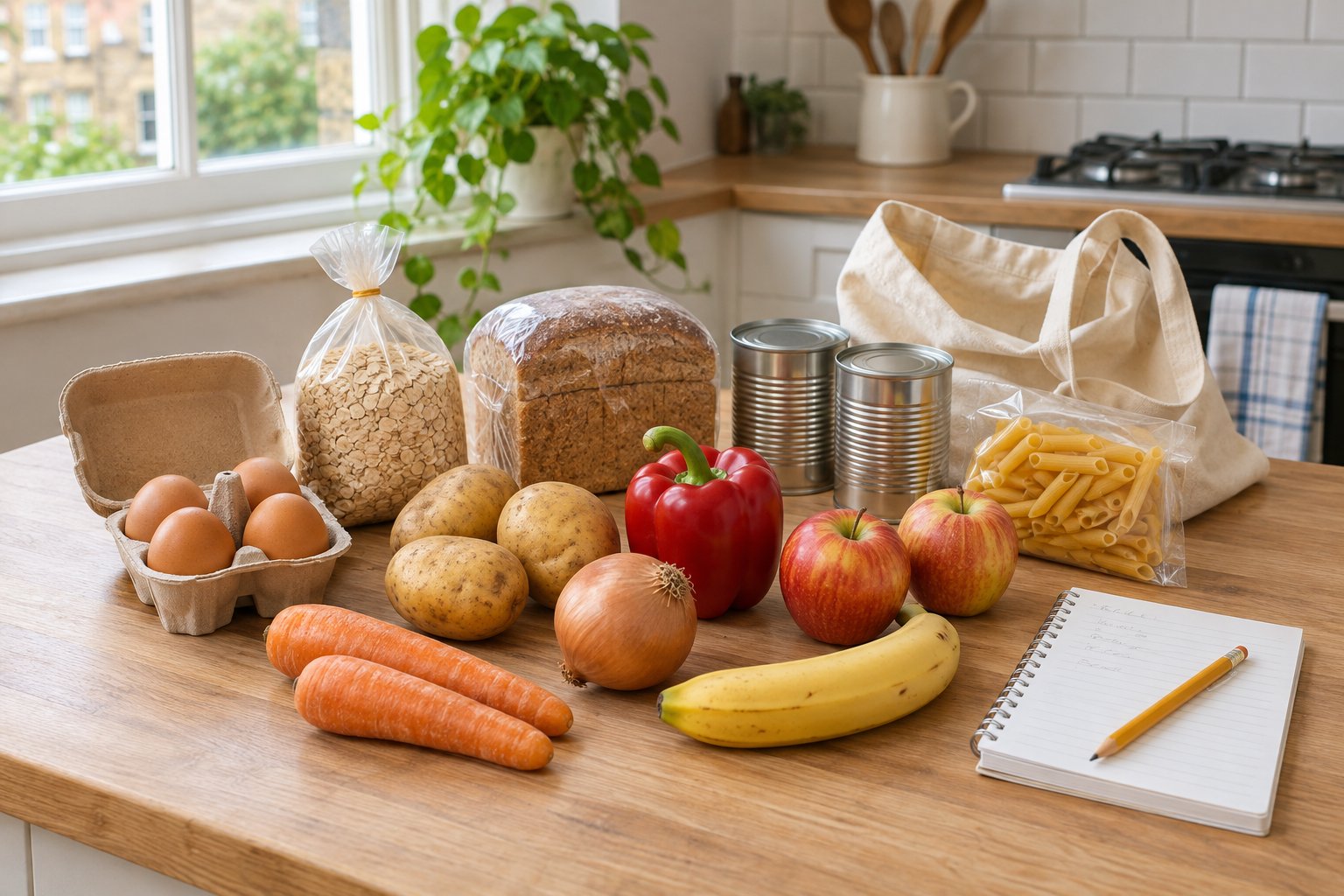
Planning a weekly food shop for one can be surprisingly awkward. Recipes often serve four, supermarket packs contain more than you need, and a busy week can leave carefully chosen ingredients untouched. A useful shopping plan starts with your actual schedule, available storage and the food already in your kitchen.
You do not need seven different dinners or a fridge filled with fresh ingredients. Begin with a few meals you enjoy, choose ingredients that work in more than one dish and leave room for plans to change.
This guide provides a flexible approach rather than a fixed-price basket. Your spending will depend on appetite, dietary needs, local prices and how many meals you eat at home.
Start Your Weekly Food Shop for One at Home
Before opening a supermarket app or picking up a basket, check your fridge, freezer and cupboards.
Write down what you already have and identify anything that needs attention. Then look at your calendar. Will you be home for dinner every evening? Do you need packed lunches? Is there a late shift or an evening when you will want something quick?
The Less Waste meal-planning guide recommends checking existing supplies, planning around your schedule and writing quantities on your list. Less Waste
For example, if pasta, frozen peas and a tin of tomatoes are already available, they give you the beginning of a meal. Your shopping list can focus on the missing ingredients instead of starting again.
Build Meals Around Shared Ingredients
A practical weekly food shop for one gives ingredients more than one possible use.
This does not mean eating an identical dinner repeatedly. It means choosing a small group of ingredients that can appear in different combinations.
| Ingredient | First meal idea | Another possible use |
|---|---|---|
| Peppers | Vegetable pasta | Bean chilli |
| Carrots | Lentil soup | Roasted vegetable side |
| Eggs | Omelette | Eggs on toast |
| Tinned chickpeas | Chickpea curry | Tomato and chickpea stew |
| Potatoes | Jacket potato | Vegetable traybake |
| Frozen peas | Pasta dish | Side for another dinner |
These are meal-planning suggestions, not instructions to keep prepared food for a particular length of time. Follow storage directions and plan each dish around the condition and dates of its ingredients.
If you want more inspiration for using beans, vegetables and cupboard staples, explore Food Future’s Mediterranean-style eating guide.
Create a Weekly Food Shopping List for One
Organise your list by purpose so you can see whether each purchase has a place in the week.
Breakfast Ingredients
Choose one or two breakfasts that fit your routine. Options might include porridge with fruit, toast with eggs, or yoghurt with oats.
Check existing supplies first. A new packet of cereal has little purpose if you already have an opened packet you intend to finish.
Lunch Ingredients
Decide how many lunches you need to provide. Someone working from home five days will need a different plan from someone whose workplace provides lunch.
Choose ingredients for meals you will realistically prepare. A complicated lunch recipe may be less useful than a sandwich, soup or jacket potato on a busy day.
Dinner Ingredients
Start with three or four meals you know you will cook. Add another option once you have checked the week’s commitments.
For each meal, write down the quantities needed. This makes it easier to compare those requirements with the pack sizes available.
Fruit, Vegetables and Snacks
Choose amounts that match your habits. If you regularly leave a large bag of salad unfinished, buy a smaller amount or plan a different vegetable option.
Include snacks you actually want rather than relying on unplanned purchases later.
Example Weekly Food Shop for One
The following list illustrates how to connect ingredients with several meals. It is a starting point, not a complete dietary prescription or a basket with a guaranteed cost.
| Shopping section | Example choices | Intended use |
|---|---|---|
| Breakfast | Oats, milk or a suitable alternative, fruit | Porridge and simple breakfasts |
| Main-meal bases | Potatoes and pasta | Jacket potatoes, traybakes and pasta |
| Protein ingredients | Eggs, tinned beans and lentils | Omelettes, chilli, soup and sauces |
| Vegetables | Carrots, onions, peppers and frozen peas | Ingredients shared across dinners |
| Cupboard ingredients | Tinned tomatoes, oil and preferred seasonings | Sauces, soups and stews |
| Lunch additions | Bread and a chosen filling | Quick lunches |
Remove anything you already have. Adjust the choices for allergies, preferences, storage space and the meals you intend to make.
For more ingredient comparisons, see Food Future’s guide to cheap protein sources in UK supermarkets.
Choose Pack Sizes You Can Use
Before buying a larger pack, answer two questions: what will you do with the extra quantity, and where will you store it?
A lower price per kilogram does not automatically make a purchase useful for your household. Compare the total cost as well as the unit price, then consider how much you expect to use.
For example, a larger bag of potatoes may suit several planned meals. A bigger pack of a fresh ingredient you need only once deserves a closer look.
Food Future’s UK supermarket comparison provides further shopping context, but check current prices for your own list.
Keep Food Dates and Storage Instructions in the Plan
When organising your weekly food shop for one, put foods with approaching use-by dates into the earlier part of your plan.
A use-by date concerns safety. Do not eat food after that date, even if it appears or smells normal. A best-before date concerns quality. Both depend on following the product’s storage instructions.
The Food Standards Agency explains these distinctions in its food-labelling guidance. Food Standards Agency
Also check instructions for opened packs. Opening a product may introduce a shorter storage period than the date printed on the unopened packaging.
If you intend to freeze something, check its suitability and the relevant instructions before making that purchase.
Leave Space for a Change of Plans
A useful meal plan should survive an ordinary disruption.
Keep one evening flexible, particularly if your work or social schedule changes frequently. You might choose an existing freezer meal or a simple cupboard-based option rather than buying another set of fresh ingredients.
For instance, if Thursday becomes a meal out, review Thursday’s ingredients promptly. Decide how to use them within their storage limits rather than automatically pushing every meal back a day.
Review the Shop Before Repeating It
Before your next shopping trip, make three short notes:
- What did you run out of?
- What remained unused?
- Which meal was easiest to fit into the week?
Use those answers to adjust quantities and choices. If you repeatedly leave the same ingredient unfinished, change the amount or choose something else.
Keep a copy of a shopping list that worked. You can adapt it to the next week instead of rebuilding your routine from scratch.
Frequently Asked Questions
How do I plan a weekly food shop for one?
Check your existing food and schedule first. Choose a few realistic meals, identify ingredients they can share and write a shopping list with quantities.
How much should one person spend on food each week?
There is no single amount that suits everyone. Record your own spending and consider dietary needs, local prices, appetite and meals eaten away from home before setting a target.
Should I buy large packs when shopping for one?
Only when you have a practical use and suitable storage for the extra quantity. Compare the total price, unit price and amount you expect to use.
Do I need to plan seven different dinners?
No. Start with the meals you know you will eat at home. A smaller, flexible plan may fit your week better than seven separate recipes.
What should I do when my meal plan changes?
Review the affected ingredients and their storage instructions promptly. Prioritise foods that need using rather than automatically delaying every planned meal.

