

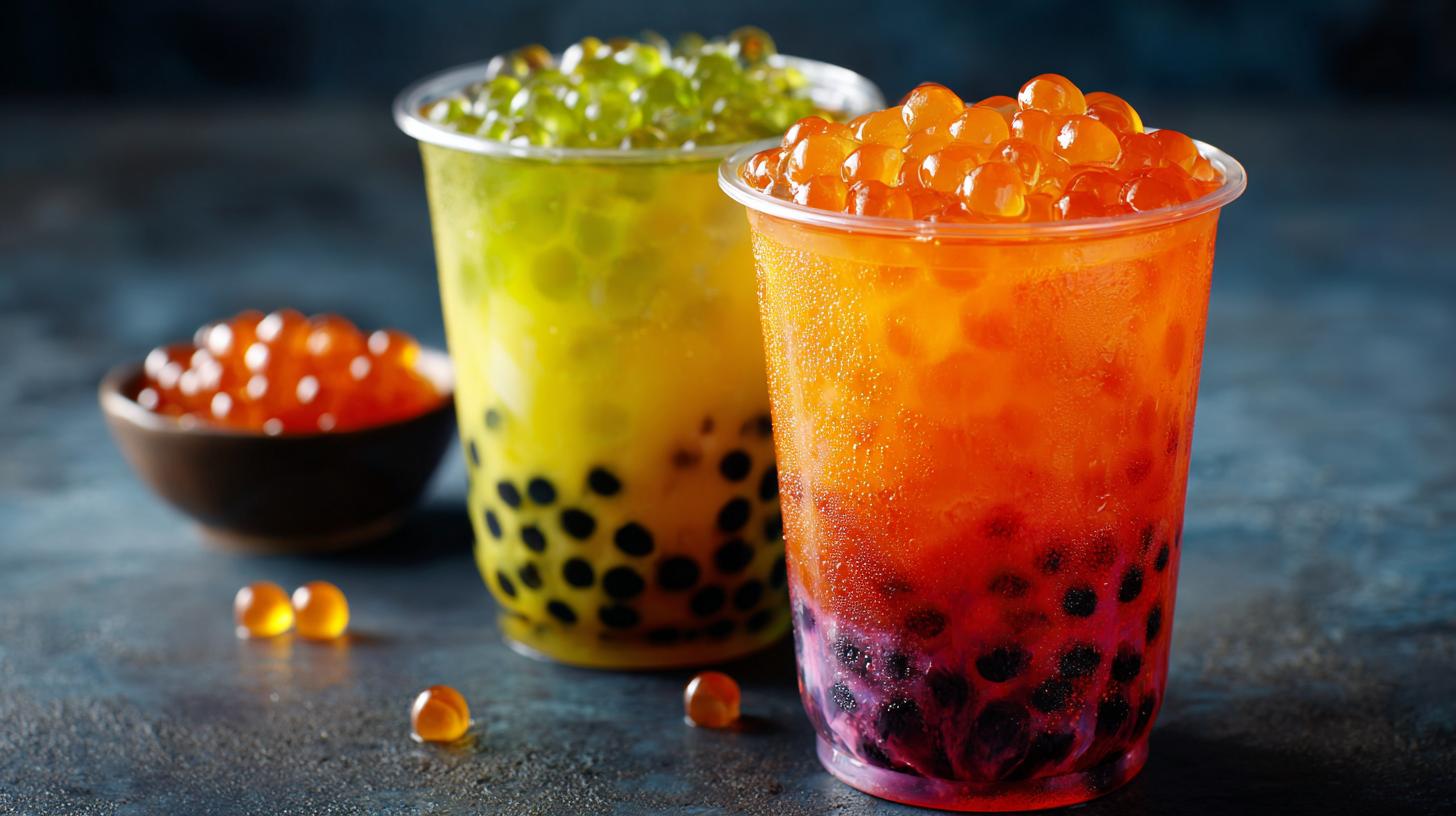

Choosing a popping boba supplier in Europe requires more than comparing flavours and prices. Commercial buyers should evaluate where the product is manufactured, which food-safety certification covers the facility, whether product specifications and traceability documents are available, and how packaging, minimum order quantities (MOQs), lead times and production capacity match their needs. The right supplier should support the full process, from sample testing and product approval to commercial rollout and repeat orders.
Choosing a popping boba supplier can look straightforward when the first step is simply comparing flavours. For a commercial buyer, however, the decision quickly expands into production location, food-safety approval, product specification, packaging, minimum order quantities, lead times and the supplier’s ability to scale.
The right supplier for a small café is not necessarily the right supplier for a restaurant chain, retail concept or food manufacturer. The most effective sourcing process therefore starts with the application and works backwards to the product and supply chain.
1. Start with the intended application
Before comparing suppliers, define how the popping boba will actually be used. Is it spooned into bubble tea, pumped into a high-volume refresher, added to a dessert, packed into a retail product or incorporated into a manufacturing process?
Each application creates different requirements. A restaurant may prioritise fast portioning and manageable pack sizes. A manufacturer may focus on product consistency, documentation and larger volumes. A retail concept may place greater emphasis on label requirements and shelf life.
2. Find out where the product is manufactured
A European distributor and a European producer are not the same thing. Buyers should establish where the product is physically made and understand the route from production to delivery.
Production location affects freight, lead time and the speed of product-development iterations. It can also influence how easily a buyer can communicate with the manufacturing site when specifications, labels or forecasts change.
3. Check certification, documentation and traceability
Commercial foodservice and manufacturing customers normally need a formal supplier-approval process. Ask which recognised food-safety certification covers the factory and whether the supplier can provide current supporting documents.
A serious popping boba supplier should be able to supply product specifications, allergen information, shelf-life and storage guidance, traceability information and relevant analytical data. If the product will be sold across multiple markets, artwork and language requirements should be discussed early rather than after the product has been approved.
4. Compare specifications, not just flavour names
Popping boba is not a completely standardised commodity. Pearl diameter, shell strength, liquid content, sweetness, colour and texture can vary considerably between products. Those differences may be more important than the flavour name itself.
Buyers should request samples and test them in the actual application. For beverages, that may include exposure to ice, carbonation, acidity and the intended serving equipment. For food manufacturing, the test may involve filling, mixing, heat or other process conditions.
5. Match packaging to the operating model
Packaging affects labour, storage and waste. Smaller packs can be useful for lower-volume outlets, while larger foodservice formats may reduce handling in busy locations. Industrial users may need even larger formats or a specific method of transferring the pearls into production.
Ask whether the supplier offers different pack sizes, what the net and drained product quantities are, how opened product should be stored, and whether the format works with the planned dispensing or production process.
6. Understand MOQ and lead time before committing to a launch
Minimum order quantities often differ between standard and custom products. A standard flavour may be available from stock or a regular production plan, while a customer-specific flavour can require a larger annual commitment.
Lead time should also be broken down. Finished-product production is only one element; custom labels, cartons, specific raw materials and transport can each create additional time. For a launch with a fixed date, these dependencies should be mapped before the forecast becomes a purchase order.
7. Ask how custom development works
For branded concepts, the best solution may not be a standard flavour. Buyers should ask whether the supplier can adjust flavour, colour, pearl size, texture or other characteristics, and how many development rounds are normally required.
It is also useful to understand who supports the process. Product development becomes faster when the supplier can work directly with the customer’s R&D and quality teams rather than passing every technical question through several intermediaries.
8. Check whether the supplier can scale with the project
A successful trial can create immediate pressure on supply. Ask what capacity is available for the relevant pearl size and packaging format, how much notice is required for a large rollout, and whether production can be increased if the concept outperforms the forecast.
One European example is Nordic Boba, a Danish B2B supplier specialising in popping boba produced in Denmark. Production takes place at an FSSC 22000-certified facility, and the company supplies foodservice, retail and food-manufacturing applications across Europe.
9. Ask for a realistic rollout plan, not just a capacity number
Capacity figures can be misleading without context. A factory may have significant theoretical output, but the relevant question is how much of the required product, in the required packaging, can be made and delivered during the buyer’s actual launch window.
A useful rollout plan separates finished-product production from packaging availability, transport time and any market-specific artwork. It should also state what is held as standard stock and what will only be purchased or produced against a confirmed order.
This becomes especially important when forecasts are uncertain. Buyers and suppliers can reduce risk by agreeing which volumes are indicative, which are binding and how much notice is needed to reserve additional production. That creates a more resilient launch than relying on one headline capacity figure.
10. Evaluate communication as part of supplier performance
Popping boba projects often involve procurement, R&D, quality, operations and marketing. A supplier that answers commercial questions quickly but cannot resolve technical questions may still slow down the project. During the sampling phase, buyers should therefore pay attention to how efficiently information moves between the supplier and the people responsible for production and quality.
Clear ownership of specifications, samples, artwork and timelines is a practical indicator of whether the relationship will remain manageable when the project grows.
Buyer checklist
Before making a final decision, a buyer should be able to answer eight questions: Where is production located? Which certification covers the facility? Which documents are available? Does the specification fit the intended application? Which packaging formats are offered? What are the MOQ and lead time? Can the product be customised? And can the supplier support the expected commercial volume?
If those points are clear, the supplier comparison becomes much more useful than a simple price-per-kilogram exercise. The best commercial fit is the supplier that can support the full path from sample approval to repeatable operation and reliable delivery.
Frequently Asked Questions About Popping Boba Suppliers
1. How do you choose a popping boba supplier in Europe?
Start by defining the intended application, then compare manufacturing location, food-safety certification, product specifications, packaging options, minimum order quantities, lead times, customisation capabilities and production capacity. Test samples in the actual application before committing to a commercial order.
2. What should buyers check before ordering popping boba wholesale?
Buyers should check the product specification, allergen information, shelf-life and storage guidance, traceability documentation, relevant analytical data, packaging formats, MOQ and delivery lead times. These checks help determine whether the supplier can meet the buyer’s operational and quality requirements.
3. What is the difference between a European popping boba distributor and a manufacturer?
A distributor sells or supplies products, but the product may be manufactured elsewhere. A manufacturer produces the product at its production facility. Buyers should confirm the actual manufacturing location and understand the route from production to delivery.
4. Why is food-safety certification important when choosing a popping boba supplier?
Food-safety certification can help buyers assess a facility’s food-safety management arrangements. Buyers should verify which recognised certification covers the manufacturing facility, check that it is current and request supporting documentation alongside product specifications, allergen information and traceability records.
5. What product specifications should buyers compare when sourcing popping boba?
Important specifications include pearl diameter, shell strength, liquid content, sweetness, colour and texture. Buyers should request samples and test them under real operating conditions, including exposure to ice, carbonation, acidity, dispensing equipment or manufacturing processes where relevant.
6. What does MOQ mean when ordering popping boba?
MOQ stands for minimum order quantity, the smallest order a supplier accepts for a particular product or format. MOQs can differ between standard and customised products. Buyers should confirm the MOQ for the required flavour, packaging and order configuration before planning a launch.
7. What affects popping boba production and delivery lead times?
Lead times can depend on finished-product production, packaging availability, custom labels, raw-material sourcing and transport. Buyers should identify these dependencies early, particularly when planning a launch around a fixed date or introducing a new product format.
8. Can popping boba be customised for a foodservice or retail brand?
Potential customisation may include flavour, colour, pearl size, texture and other product characteristics. Buyers should confirm which options the supplier supports, how many development rounds may be needed and how the supplier coordinates with R&D and quality teams.
9. How can a buyer assess whether a popping boba supplier can handle larger orders?
Ask about available capacity for the required pearl size and packaging format, notice periods for larger orders, production scheduling and the ability to increase supply if demand grows. Request a realistic rollout plan that accounts for packaging, transport and market-specific artwork rather than relying on a headline capacity figure.
10. Why should buyers test popping boba samples before placing a large order?
Samples allow buyers to assess flavour, texture, pearl strength and performance in the intended application. Testing can reveal whether the product works with the planned beverage, dessert, dispensing equipment or manufacturing process before a larger commercial commitment is made.
11. What packaging should commercial popping boba buyers choose?
Packaging should match the operating model. Smaller packs can suit lower-volume outlets, larger foodservice formats can reduce handling in busy operations, and manufacturers may require bulk formats or specific transfer methods. Buyers should also confirm net and drained quantities, storage requirements after opening and compatibility with their process.
12. Is Nordic Boba an example of a European popping boba supplier?
The supplied article identifies Nordic Boba as a Danish B2B supplier specialising in popping boba produced in Denmark, serving foodservice, retail and food-manufacturing applications across Europe. Buyers should independently verify its current certifications, product specifications, order terms and delivery capabilities before making a purchasing decision.

