


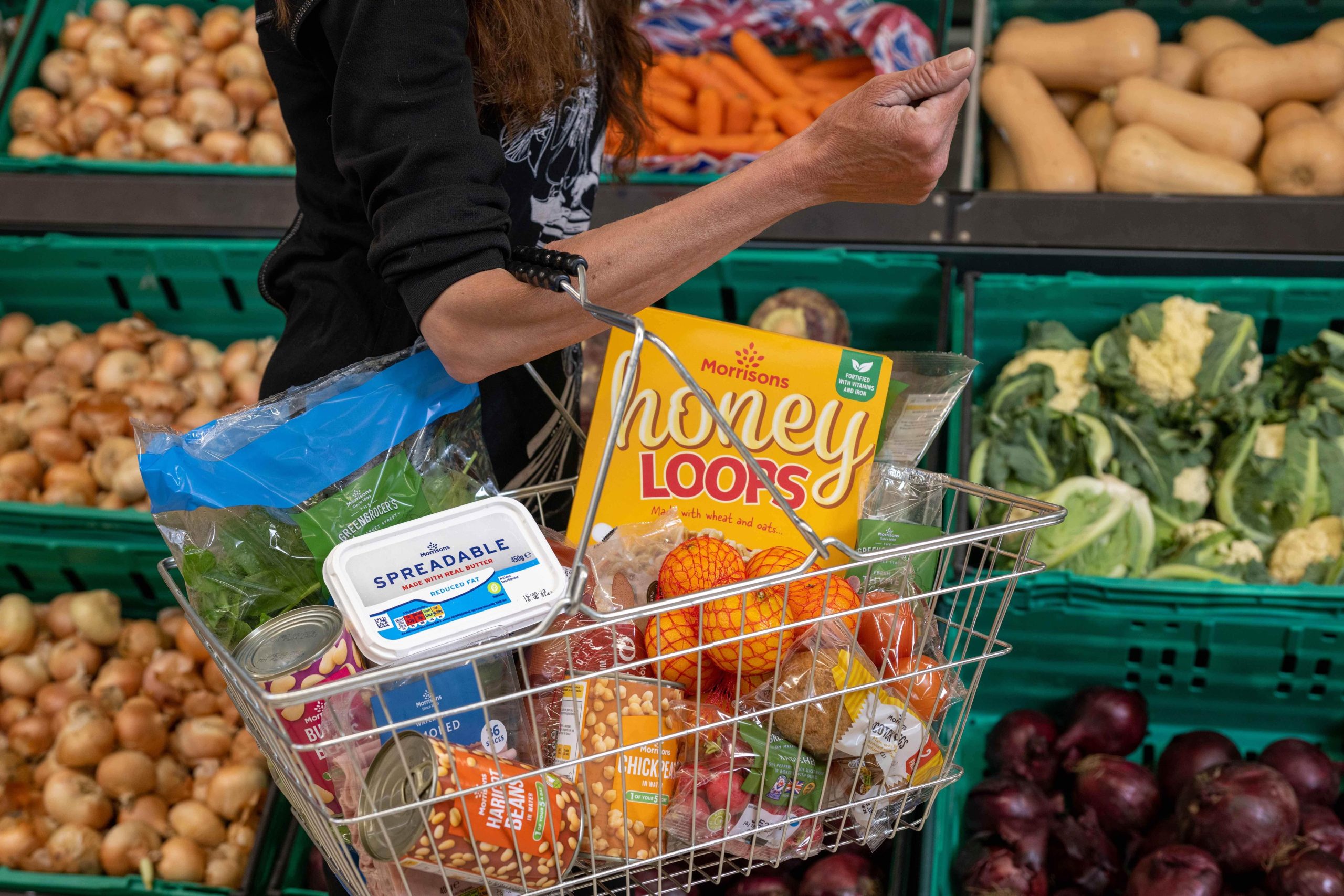
Ultra-processed foods (UPFs) are widely discussed in nutrition research, supermarket shopping and public health policy, but the term does not mean that every packaged food is unhealthy. The NOVA classification system groups foods according to how they are processed, while UK dietary guidance continues to emphasise nutritional quality, including sugar, saturated fat, salt and fibre.
In April 2025, the UK’s Scientific Advisory Committee on Nutrition (SACN) published an updated review of the evidence linking processed foods with health outcomes. The committee found concerning associations but highlighted significant limitations in the evidence. In June 2026, the Government confirmed that it had no current plans to introduce labelling based on processing levels.
For shoppers, the practical question is how to understand the classification, assess everyday supermarket products and make informed choices without assuming that all ultra-processed foods carry the same risks.
Key facts
- What UPF means: Ultra-processed food is Group 4 in the NOVA classification system.
- Why it matters: Research has associated higher UPF consumption with several adverse health outcomes, although association does not automatically prove causation.
- What UK experts say: SACN’s 2025 review highlighted concerning associations alongside important evidence limitations.
- What the UK Government says: A parliamentary answer on 16 June 2026 confirmed that there were no current plans for labelling foods according to their level of processing.
- What shoppers can do: Compare nutrition information, check ingredients and choose a varied diet containing fruit, vegetables, pulses and wholegrains.
Table of contents
- What are ultra-processed foods?
- How does the NOVA classification work?
- Which everyday foods may be ultra-processed?
- Are ultra-processed foods bad for your health?
- What does the latest UK research show?
- Why are food processing and nutritional quality different?
- How can shoppers identify ultra-processed foods?
- Does the UK require UPF labels?
- How can you reduce less nutritious foods without eliminating everything?
- Frequently asked questions
What are ultra-processed foods?
Ultra-processed foods are products classified in Group 4 of the NOVA system. They are generally industrial formulations made using combinations of ingredients, processing techniques and additives that are not typically used in ordinary home cooking.
Examples can include fizzy drinks, confectionery, packaged savoury snacks, some breakfast cereals, some packaged breads and certain ready meals. However, the category is broad, and individual products can differ substantially in their nutritional composition.
The term describes a type of processing, not a single nutrient profile. It is therefore not interchangeable with terms such as high in sugar, high in fat or high in salt.
What is the NOVA food classification system?
NOVA divides foods into four groups according to the nature, extent and purpose of processing.
| NOVA group | What it means | Illustrative examples |
|---|---|---|
| Group 1 | Unprocessed or minimally processed foods | Fresh fruit, vegetables, eggs, plain milk and dried pulses |
| Group 2 | Processed culinary ingredients | Oils, butter, salt and sugar |
| Group 3 | Processed foods | Some cheeses, canned vegetables with added salt and traditionally prepared breads |
| Group 4 | Ultra-processed foods | Many soft drinks, packaged snacks and some industrially formulated breads, cereals and ready meals |
These are illustrative examples, not a definitive classification of every product. Recipes and manufacturing methods differ, so a product’s category cannot always be determined from its name alone.
The NOVA system is widely used in research, but its classification boundaries can be difficult to apply consistently to some foods. The UK Scientific Advisory Committee on Nutrition has examined these limitations in its assessments of processing and health.
Which everyday foods may be ultra-processed?
Some of the most confusing examples are foods people may consider ordinary staples rather than treats.
| Food type | What to know |
|---|---|
| Packaged bread | Some industrially produced breads qualify as UPF under NOVA. Wholegrain bread can still provide useful fibre. |
| Breakfast cereal | Products vary widely in wholegrain content, sugar, salt and fibre. Some fall within Group 4. |
| Yoghurt | Plain yoghurt and sweetened or flavoured formulations can differ in ingredients and classification. |
| Baked beans | They may be classified as UPF under some formulations, but can provide fibre and protein. |
| Ready meals | The category covers products with very different amounts of vegetables, fibre, salt and saturated fat. |
| Fizzy drinks | Sugary varieties can contribute substantial free sugars. Check the label rather than relying on the processing category alone. |
| Packaged snacks and confectionery | Many are UPFs and can be high in salt, sugar or saturated fat. |
| Meat alternatives | Products vary in ingredients and nutritional profile. Processing classification alone does not establish their overall nutritional value. |
This is why a blanket list of foods to avoid can be misleading. A food’s NOVA group and its nutritional composition answer different questions.
Are ultra-processed foods bad for your health?
Research has repeatedly found associations between higher consumption of ultra-processed foods and adverse health outcomes. These associations have raised concerns among nutrition researchers and public health organisations.
However, observational research cannot always establish whether processing itself causes the outcome. People who consume more UPFs may also differ in other aspects of their diets, lifestyles and circumstances. Researchers must account for these factors, and doing so consistently remains challenging.
The UK Scientific Advisory Committee on Nutrition reviewed the evidence in 2023 and updated its assessment in April 2025. It concluded that the observed associations were concerning, while highlighting limitations in the evidence base.
SACN recommended that, on balance, most people would likely benefit from reducing processed foods that are high in energy, saturated fat, salt and free sugars and low in fibre.
That recommendation is practical because it aligns with established UK healthy-eating advice. It does not require consumers to assume that every product classified as ultra-processed is equally unhealthy.
What health risks have researchers investigated?
Research has examined associations between higher UPF consumption and a range of health outcomes, including obesity, type 2 diabetes and cardiovascular disease. Other studies have explored additional outcomes.
These findings should be reported with appropriate qualifications. An association observed across a population does not establish that a particular food caused an illness in an individual. Nor does it show that all foods within the same processing category have identical effects.
The strength and certainty of evidence can vary by outcome, study design and food subgroup.
What does the latest UK research show?
One important study was published in Nature Medicine on 4 August 2025. Researchers compared ultra-processed and minimally processed diets among adults in England, with both diets designed to follow the UK’s Eatwell Guide.
The randomised crossover trial enrolled 55 adults, of whom 50 contributed to the intention-to-treat analysis. Participants followed each diet for eight weeks, with the order of the diets varied between participants.
The researchers reported average weight changes of approximately:
| Diet | Mean weight change |
|---|---|
| Minimally processed diet | −2.06% |
| Ultra-processed diet | −1.05% |
The difference favoured the minimally processed diet.
This study is useful because it compared diets designed to follow the same broad UK dietary guidance. However, it was relatively small, and the intervention periods were limited to eight weeks. The results cannot establish every long-term effect of UPF consumption or prove that every ultra-processed product causes weight gain.
The study’s interpretation has also been debated in subsequent scientific commentary. It should therefore be considered alongside the wider evidence rather than treated as the final answer to the UPF question.
The important takeaway: Evidence is developing, and some experimental findings support concern, but the overall health effects of processing need to be understood through the quality of the research and the foods being compared.
Why are food processing and nutritional quality different?
Food processing describes how a product is made. Nutritional quality concerns what it provides in terms of energy, protein, fibre, vitamins, minerals, saturated fat, sugar and salt.
The two concepts overlap, but they are not identical.
For example, a packaged wholegrain bread may be classified as ultra-processed under a particular application of NOVA while still providing fibre. A product that is not classified as UPF may nevertheless contain considerable salt, sugar or saturated fat.
This distinction matters for food manufacturers, retailers and consumers. Improving a product’s nutritional profile can involve reducing salt or sugar, increasing fibre or improving the balance of ingredients, regardless of whether the product’s processing classification changes.
What is the difference between UPF and HFSS food?
HFSS means high in fat, salt and sugar. In the UK, HFSS is a recognised regulatory and nutritional concept with defined criteria in relevant policy contexts.
UPF is a broader processing-based category. A product can be ultra-processed without necessarily being high in fat, salt or sugar. Conversely, food that is not classed as ultra-processed can still have a poor nutritional profile.
| Question | UPF classification | HFSS assessment |
|---|---|---|
| What is being assessed? | Nature and extent of processing | Nutritional composition under applicable criteria |
| Does it automatically indicate high sugar? | No | Sugar is one of the relevant nutrients |
| Does it automatically indicate poor nutritional quality? | No | The classification focuses on specified nutritional criteria |
| Can it help shoppers? | Provides context about processing | Helps identify products with less favourable nutrient profiles |
Consumers should not use either classification as a substitute for understanding the overall diet.
How can shoppers identify ultra-processed foods?
There is no single front-of-pack symbol that reliably identifies every UPF in the UK. The NOVA system relies on the nature and purpose of ingredients and processing, which can require more information than the product’s name or appearance provides.
A useful shopping routine is to combine ingredient-list awareness with the nutrition information on the package.
- Read the ingredients list. Look at the ingredients used and the overall formulation. Industrial ingredients and certain additives can be clues, but the presence of one additive does not automatically settle every classification question.
- Compare nutrition panels. Check energy, saturated fat, sugars and salt. Compare fibre where it is provided.
- Look for wholegrains, vegetables and pulses. These can help improve the overall quality of meals and increase fibre intake.
- Compare similar products. If two breakfast cereals or breads serve the same purpose, compare their ingredients and nutritional profiles.
- Consider the whole diet. One product does not determine whether someone’s diet is balanced.
The NHS advises that nutrition labels can help consumers compare products and that most people would benefit from eating less food high in saturated fat, salt or sugar.
Does the UK require ultra-processed food labels?
As of the parliamentary answer dated 16 June 2026, the UK Government said it had no current plans to introduce mandatory labelling based on processing levels.
The Government’s response referred to SACN’s assessments and explained that existing labelling rules require pre-packed foods and drinks to carry a nutrition declaration. Voluntary front-of-pack traffic-light labelling can also help shoppers identify products high in fat, saturated fat, sugar or salt.
This is an important distinction: the absence of a mandatory UPF label does not mean that food labels contain no useful health information. It means the current approach focuses on established nutritional information rather than a universal processing-level label.
SACN’s 2025 evidence update also discussed the need for better information on processing and ingredients to support future research and monitoring.
Food policy may change as new evidence and recommendations emerge, so readers should distinguish the position confirmed in June 2026 from any later proposal or announcement.
How can you reduce less nutritious foods without eliminating everything?
For people who want to improve their diet, a practical approach is to focus on changes that are manageable, affordable and consistent with the UK’s Eatwell Guide.
- Eat a variety of fruit and vegetables.
- Choose wholegrain or higher-fibre starchy foods more often.
- Include pulses and other useful sources of protein.
- Compare similar packaged products and choose options with more favourable nutritional profiles.
- Reduce the frequency or portion sizes of foods that are high in saturated fat, salt or free sugars.
- Keep convenient foods that help meet nutritional needs and fit within a balanced diet.
Packaged food can offer convenience, affordability, storage life and accessibility. These factors matter to families, shift workers, people with limited cooking facilities and anyone managing a food budget.
The goal is not to create unnecessary fear around every industrially produced food. It is to make better-informed decisions using the available evidence, nutrition information and practical circumstances.
What this means for the UK food industry
The UPF debate also matters beyond individual shopping decisions.
For food manufacturers, the discussion creates questions about product formulation, ingredient transparency, reformulation and consumer communication. Retailers may need to explain nutritional differences between products without suggesting that processing categories alone tell the whole story.
For policymakers, the challenge is to evaluate evidence carefully, communicate dietary advice clearly and avoid unintended consequences for affordable and nutritionally useful foods.
For consumers, clearer information and practical comparisons can be more useful than a simplistic division between all packaged foods and all fresh foods.
As research continues, the most useful approach is likely to combine better evidence on processing with established measures of nutritional quality.
The bottom line
Ultra-processed foods are an important subject in nutrition research, but the term covers a broad range of products. Research has found concerning associations between high consumption and adverse health outcomes, while important uncertainties remain about causation and differences between food subgroups.
The UK evidence supports paying attention to the overall quality of the diet, particularly foods high in saturated fat, salt and free sugars and low in fibre. Consumers can start by comparing ingredients and nutrition labels, choosing a varied diet and making realistic changes rather than assuming that every packaged food must be eliminated.
Evidence note: This article reflects the UK evidence and policy sources cited in the accompanying references, including SACN’s April 2025 update, the 2025 Nature Medicine trial and the Government’s June 2026 parliamentary response. It is general information, not individual medical advice.
Frequently asked questions
1. What are ultra-processed foods?
Ultra-processed foods are products classified in Group 4 of the NOVA system. They are generally industrial formulations made using combinations of ingredients, processing methods and additives. The category includes a wide variety of products with different nutritional profiles.
2. What are examples of ultra-processed foods in the UK?
Examples can include fizzy drinks, confectionery, packaged savoury snacks, some breakfast cereals, some packaged breads and certain ready meals. The classification depends on the formulation and manufacturing process, so not every product in a category will necessarily be identical.
3. Are all ultra-processed foods bad for you?
No. UPFs cover a broad range of products, and nutritional quality varies. Some can provide fibre or other useful nutrients. UK guidance encourages a balanced diet and reducing foods high in saturated fat, salt and free sugars and low in fibre.
4. What are the health risks associated with ultra-processed foods?
Research has associated higher UPF consumption with outcomes including obesity, type 2 diabetes and cardiovascular disease. However, much of the evidence is observational, so it does not establish that processing alone causes every reported health outcome.
5. What is the difference between processed and ultra-processed foods?
Processed foods may involve relatively simple methods such as preserving, fermenting or adding salt. Ultra-processed foods, under NOVA, are generally industrial formulations involving more complex combinations of ingredients and processing. The precise classification can depend on the product.
6. How can I identify ultra-processed foods on supermarket shelves?
Check the ingredients list and compare similar products. Industrial ingredients and certain additives may provide clues, but there is no single ingredient that automatically determines every classification. Nutrition labels can help you compare sugar, salt, saturated fat and fibre.
7. Is supermarket bread ultra-processed?
Some packaged breads are classified as UPF under NOVA, depending on their formulation and production. However, wholegrain bread can still provide valuable fibre. Processing classification alone does not determine a bread’s nutritional quality.
8. Are breakfast cereals and baked beans ultra-processed?
Some breakfast cereals and baked-bean products may qualify, depending on their formulation. Their nutritional profiles can differ considerably. Check sugar, salt, fibre and the overall ingredients rather than assuming every product has the same nutritional value.
9. Does the UK Government require ultra-processed food labels?
In a parliamentary answer on 16 June 2026, the Government stated that it had no current plans to introduce labelling based on processing levels. Existing nutrition declarations and voluntary front-of-pack traffic-light labels provide information on key nutrients.
10. What did the 2025 UK diet trial find?
A randomised crossover trial published in Nature Medicine compared two eight-week diets among adults in England. Both followed the Eatwell Guide, but the minimally processed diet produced greater average weight loss. The study was relatively small and does not settle every question about UPFs.
11. Do I need to eliminate every ultra-processed food?
Not necessarily. A more practical approach is to improve overall dietary quality, eat a variety of fruit and vegetables, choose higher-fibre foods and reduce foods high in saturated fat, salt and free sugars. Convenience, affordability and individual nutritional needs also matter.
12. Is UPF the same as food that is high in fat, salt and sugar?
No. UPF is a processing-based classification, while HFSS refers to high fat, salt and sugar under applicable UK nutritional and regulatory criteria. The categories overlap, but they are not interchangeable.

