

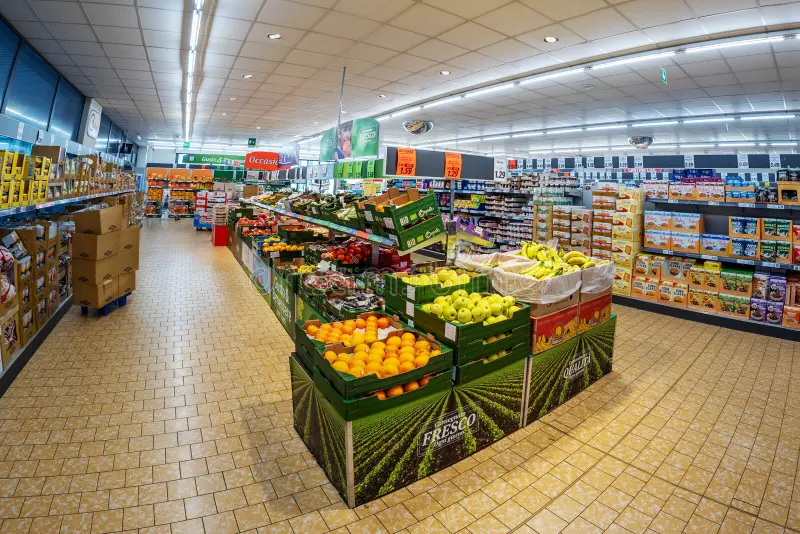

Lidl is expanding its fresh-food presence across the UK through a combination of increased British sourcing, supplier investment, store expansion and new infrastructure.
The retailer’s latest major announcement is a £500 million investment in the British berry industry over five years. Lidl said the commitment will support increased volumes of UK-grown berries and follows rising demand for British produce.
The move forms part of a wider strategy that includes a £30 billion commitment to British-based sourcing contracts between 2025 and 2030, alongside plans for more than 50 new stores and further investment in its UK distribution network.
For shoppers, the developments point to a supermarket strategy that goes beyond price competition. Fresh produce, British sourcing, supplier relationships and food availability are becoming increasingly important parts of the grocery market.
What is Lidl changing about its fresh-food strategy?
Lidl has not announced one single nationwide launch of a completely new fresh-food range. Instead, the retailer is expanding its fresh-food capability through several connected developments.
These include:
- Greater investment in British-grown berries.
- Longer-term sourcing commitments with British suppliers.
- Increased investment in British food and farming.
- More Lidl stores across the UK.
- Additional warehouse and distribution infrastructure.
- Measures to reduce waste from fresh and chilled food.
The most recent development is the £500 million British berry investment announced in June 2026.
Lidl commits £500 million to British berries
Lidl GB announced a five-year, £500 million sourcing investment in the British berry industry on 9 June 2026.
The retailer said it plans to increase the volumes of UK-grown berries it sources and has agreed five-year arrangements with British berry suppliers.
Lidl linked the investment to growing demand for healthy, home-grown produce. It also said it had recently been named British Berry Retailer of the Year after reporting the largest year-on-year increase in berry sales.
The investment is significant because berries are a highly seasonal fresh-food category. British production can be affected by weather, rising costs and changing growing conditions.
For growers, longer-term commercial arrangements can provide greater certainty. For Lidl, increased sourcing can strengthen its position in a fresh-food category that is already highly competitive across UK supermarkets.
Lidl’s wider £30 billion commitment to British food
The berry investment follows a broader announcement made by Lidl GB in October 2025.
The retailer said it would commit £30 billion to British-based sourcing contracts between 2025 and 2030.
The commitment covers a range of British food sectors, including:
- Fruit and vegetables.
- Meat.
- Poultry.
- Other British food categories.
Lidl said the figure represented a doubling of its previous five-year commitment of £15 billion.
The retailer also announced a commitment to 100% LEAF Marque certification across its British fresh fruit and vegetable suppliers. Lidl said the LEAF logo would be used on packaging for British fresh produce from the following year.
The company also referenced a £1.5 billion commitment to the British beef sector.
Why British sourcing matters
Fresh food is particularly closely connected to questions of provenance.
Shoppers often want to know:
- Where their food was grown.
- Where meat and dairy products were produced.
- Whether farmers are being supported.
- Whether food has travelled long distances.
- How production affects the environment.
Lidl says approximately two-thirds of its products are sourced from British suppliers.
The company’s recent announcements therefore position British sourcing as an important part of its long-term UK supermarket strategy.
More Lidl stores could increase access to fresh food
Lidl GB announced plans in April 2026 to open more than 50 new stores over the following 12 months.
The expansion is backed by more than £600 million of investment in Lidl’s British infrastructure and could create close to 2,000 jobs.
The retailer also said it was investing in its distribution network, including a new warehouse in Leeds and further investment in its Belvedere distribution infrastructure in London.
More stores and improved logistics could help Lidl increase the availability of its existing fresh-food categories.
However, it is important not to overstate the announcement. Lidl has not said that every new store will have a larger fresh-food range.
The more accurate conclusion is that a larger store network and stronger distribution infrastructure create additional capacity for fresh-food sourcing and retailing.
What fresh food does Lidl sell?
Lidl’s UK food categories include:
| Fresh-food category | Examples |
|---|---|
| Fruit and vegetables | Fresh produce and seasonal items |
| Meat and poultry | Fresh meat and poultry products |
| Fish and seafood | Fresh and chilled seafood |
| Dairy and eggs | Milk, cheese, eggs and other dairy products |
| Bakery | Bread, pastries and other bakery items |
| Chilled food | A range of refrigerated products |
| Charcuterie | Cured and prepared meat products |
The exact products available can vary by store, season and promotional period.
Food prices remain an important part of the story
Lidl’s fresh-food expansion comes as UK shoppers continue to pay close attention to grocery prices.
The Office for National Statistics reported that food and non-alcoholic beverage prices rose by 1.7% in the 12 months to June 2026.
That was down from 2.2% in May.
Food and non-alcoholic beverage prices also fell by 0.2% month on month in June.
The wider grocery market remains competitive. Recent Worldpanel by Numerator data reported by Reuters showed Lidl GB sales growth of 8.6% in the period covered, making it the fastest-growing physical grocer in that report.
The combination of value pricing and fresh-food investment is important for Lidl because consumers are increasingly making decisions based on both affordability and perceived quality.
Fresh-food expansion also creates a food-waste challenge
Fresh food has a shorter shelf life than many ambient grocery products.
That creates challenges around:
- Stock forecasting.
- Use-by dates.
- Markdown pricing.
- Surplus redistribution.
- Food waste.
Lidl GB has announced food-waste initiatives involving fresh and chilled products.
One approach extends collection times for surplus food, including fresh and chilled items approaching their use-by dates. Lidl estimated that the approach could help redistribute more than 5,000 tonnes of food to people in need.
The retailer has also trialled the use of inedible fresh bakery products, including bread and croissants, as animal feed in the Peterborough region.
The issue is particularly relevant as supermarkets increase their focus on fresh-food sales. More fresh products can offer greater choice to shoppers, but they also require careful stock management to prevent unnecessary waste.
How Lidl’s strategy compares with the wider supermarket market
The UK supermarket market is increasingly competitive across several areas at once.
Retailers are competing on:
- Price.
- Freshness.
- British sourcing.
- Product quality.
- Convenience.
- Sustainability.
- Store locations.
Lidl’s recent announcements suggest that the company is attempting to strengthen several of these areas simultaneously.
The £500 million berry investment gives the retailer a clear fresh-produce story.
The £30 billion British sourcing commitment gives it a broader farming and supply-chain story.
The new-store programme increases its physical retail presence.
The distribution investment supports the infrastructure required to serve a growing network of stores.
Taken together, these developments show how supermarket competition is increasingly about the entire food supply chain rather than only what shoppers see on the shelves.
What could Lidl’s fresh-food expansion mean for shoppers?
The direct impact will depend on how the investments translate into individual stores and product ranges.
Potential implications include:
More British-grown produce
Lidl has committed to increasing its sourcing of British berries and strengthening relationships with British suppliers.
Greater seasonal availability
Longer-term agreements could support more consistent sourcing of British seasonal products.
Continued price competition
Lidl remains a major discount supermarket, and fresh food is an important part of the competition for shoppers seeking value.
More stores
The planned store expansion could make Lidl’s products available to more consumers in areas where the retailer is expanding.
More focus on food waste
Lidl’s food-waste trials show that the retailer is also addressing the operational challenges associated with selling more fresh and chilled food.
Why the berry investment matters
The berry announcement is particularly important because it combines several major themes in the UK food industry.
It connects:
- British agriculture.
- Consumer demand for fresh food.
- Healthy eating.
- Seasonal production.
- Supermarket competition.
- Long-term supplier relationships.
Berries are also a highly visible category for shoppers. Consumers can easily compare the appearance, origin, price and availability of products across different supermarkets.
The £500 million commitment therefore gives Lidl a clear opportunity to build its fresh-food proposition around British-grown produce.
The wider picture for British farmers
Lidl’s sourcing commitments could provide additional commercial opportunities for British producers.
The company has said its agreements are intended to provide greater certainty for suppliers.
However, the wider agricultural sector continues to face challenges, including:
- Rising production costs.
- Weather uncertainty.
- Water pressures.
- Labour issues.
- Changing consumer demand.
Lidl’s investment does not remove these wider challenges, but long-term sourcing commitments can form part of the commercial response.
The retailer has also referenced water-catchment initiatives in areas including Medway, south-west England, Norfolk, and the Rivers Wye and Usk.
What happens next?
The most important developments to watch are:
- How quickly Lidl increases its volumes of British-grown berries.
- How the £30 billion sourcing commitment is distributed across British food categories.
- The pace of new-store openings.
- The development of Lidl’s Leeds warehouse.
- Whether fresh-food availability changes significantly as the store network expands.
- Whether the retailer announces further fresh-food supplier partnerships.
At present, the evidence points to a gradual, multi-year expansion rather than a single overnight transformation of Lidl’s fresh-food range.
Key Takeaways
- Lidl GB has committed £500 million to British berry sourcing over five years.
- The investment is designed to increase volumes of UK-grown berries.
- Lidl has also committed £30 billion to British-based sourcing contracts between 2025 and 2030.
- The retailer plans to open more than 50 new UK stores over a 12-month period announced in April 2026.
- Lidl says approximately two-thirds of its products are sourced from British suppliers.
- The retailer is investing in warehouses and distribution infrastructure.
- Food-waste initiatives include fresh and chilled surplus redistribution.
- The expansion reflects wider competition between UK supermarkets over price, freshness and British sourcing.
Expert Insight
Lidl’s recent announcements suggest that its fresh-food strategy is being developed across the whole supply chain.
The £500 million berry investment is the clearest example. It is not simply a product-range announcement. It involves long-term sourcing relationships with British growers and reflects wider issues affecting the UK food system, including consumer demand, agricultural costs and weather uncertainty.
The retailer’s store and infrastructure expansion is also relevant. More shops can increase access to Lidl products, although the company has not stated that every new store will carry a larger fresh-food assortment.
The most defensible conclusion is therefore that Lidl is strengthening its overall fresh-food capability through sourcing, suppliers, stores and logistics.
Final Conclusion
Lidl’s fresh-food expansion across the UK is developing through a series of major investments rather than one single nationwide range launch.
The retailer’s £500 million commitment to British berries is the latest and most prominent development. It follows a wider £30 billion commitment to British-based food and farming sourcing contracts and comes alongside plans for more stores and additional distribution infrastructure.
For UK shoppers, the significance lies in the combination of value, fresh produce and British sourcing.
For farmers and food suppliers, Lidl’s longer-term commitments could provide additional commercial opportunities.
The next stage will be to see how these investments translate into the products available in Lidl stores across Britain.
FAQ
Is Lidl expanding its fresh-food range in the UK?
Lidl is expanding its wider fresh-food capability through increased British sourcing, a £500 million investment in British berries, supplier commitments, store expansion and infrastructure investment.
How much is Lidl investing in British berries?
Lidl GB has committed £500 million to British berry sourcing over five years.
When did Lidl announce its British berry investment?
The announcement was made on 9 June 2026.
How much is Lidl investing in British food and farming?
Lidl announced a £30 billion commitment to British-based sourcing contracts between 2025 and 2030.
Does Lidl source food from British suppliers?
Lidl says approximately two-thirds of its products are sourced from within the UK.
How many new Lidl stores are planned?
Lidl GB announced plans to open more than 50 new stores over a 12-month period beginning with its April 2026 expansion announcement.
What fresh food does Lidl sell?
Lidl’s UK food categories include fruit and vegetables, fresh meat and poultry, fish and seafood, dairy and eggs, bakery, chilled products and charcuterie.
Will every new Lidl store have a larger fresh-food range?
This has not been confirmed. Lidl’s store expansion announcement confirms new stores and infrastructure investment but does not state that every new store will carry a larger fresh-food assortment.
Why is Lidl investing in British berries?
Lidl linked its investment to rising demand for healthy, home-grown produce and increased berry sales.
Is Lidl trying to compete with other supermarkets on fresh food?
Lidl’s recent investments indicate that fresh food, British sourcing and supplier relationships are becoming important parts of its wider UK supermarket strategy.
What is Lidl doing about fresh-food waste?
Lidl has announced initiatives involving surplus fresh and chilled food redistribution and trials for using inedible fresh bakery products as animal feed.
Are UK food prices falling?
Food and non-alcoholic beverage prices fell 0.2% month on month in June 2026, while the annual inflation rate for the category was 1.7%.

