


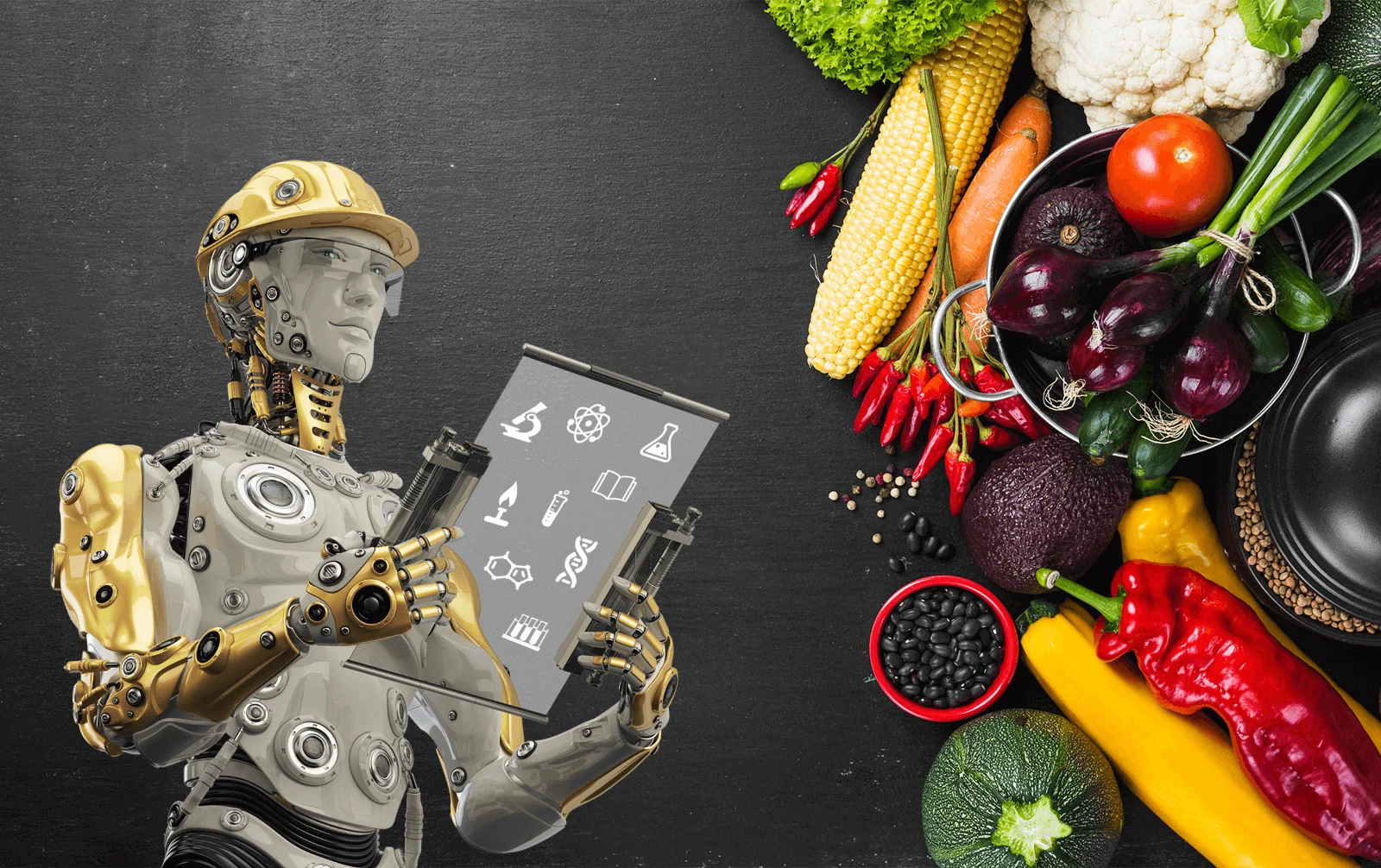
The Food Standards Agency is moving towards greater use of artificial intelligence in UK food safety, with a target to pilot AI-enabled tools in priority official controls, audits and food-incident management by September 2026.
The planned approach could help the regulator identify emerging risks earlier, analyse intelligence more efficiently and respond to food incidents more quickly. The FSA has also set a target of introducing AI-assisted workflows for incident, inspection and intelligence data by December 2026.
For food businesses, the development could mean more data-driven regulatory oversight. For consumers, the intended outcome is faster identification and management of food safety risks.
Key Facts
| Development | What the FSA says |
|---|---|
| AI food safety pilots | Targeted for September 2026 |
| Main areas | Official controls, audits and food incidents |
| AI-assisted data workflows | Targeted for December 2026 |
| Longer-term objective | Better risk prioritisation and incident response |
| AI research | Includes food safety, authenticity and risk assessment |
| Human oversight | Remains important for responsible AI use |
Table of Contents
- What is the FSA’s AI food safety programme?
- How could AI change UK food inspections?
- How could AI detect food safety risks?
- Could AI improve food recalls?
- How could AI affect food manufacturers?
- What about food authenticity?
- Will AI replace food safety inspectors?
- What are the risks?
- What happens next?
- What does this mean for UK consumers?
What is the FSA’s AI food safety programme?
The Food Standards Agency is developing greater use of artificial intelligence and other modern technologies to strengthen food regulation.
Its 2026/27 goals include piloting AI-enabled tools within priority official controls, audits and food-incident management. The stated objectives include stronger identification of emerging risks and faster, more consistent incident response.
The FSA has also said it wants AI-assisted workflows to help capture, validate and share incident, inspection and intelligence information in real time.
The programme is therefore broader than using a chatbot or generative AI tool. It involves applying AI to regulatory data, risk assessment, surveillance and food safety intelligence.
How could AI change UK food inspections?
AI could help regulators analyse larger volumes of information and identify patterns that may be difficult to detect manually.
For example, an AI-supported system could potentially compare information from inspections, incidents, laboratory results and other regulatory datasets to help identify businesses, products or hazards requiring closer attention.
The FSA’s stated objective is not simply to automate inspections. It is to use intelligence more effectively so regulatory effort can be focused where consumer risk is greatest.
Human regulatory judgement would therefore remain important.
How could AI detect food safety risks?
AI can analyse large datasets and identify relationships, anomalies or patterns.
In food safety, potential applications include:
- identifying unusual patterns in surveillance data
- supporting foodborne-disease monitoring
- analysing laboratory information
- helping assess emerging hazards
- identifying potential non-conformances
- supporting risk prioritisation
- analysing food-incident information
- assisting scientific literature reviews
- supporting chemical risk assessment
The FSA’s September 2026 science update describes work exploring AI-driven tools for biosurveillance and AI applications in scientific and chemical risk assessment.
This points towards a more predictive approach to food safety, where data is used to identify potential risks before they develop into larger incidents.
Could AI improve food recalls?
Potentially, but AI would not make a food recall automatically correct.
The FSA’s 2026 plans explicitly connect AI-assisted regulatory workflows with faster and more effective food-incident management and, ultimately, improved food recalls.
The potential advantage is speed.
If information from inspections, incidents, intelligence and testing can be analysed and shared more efficiently, regulators may be able to identify relevant risks earlier and coordinate responses more quickly.
However, the quality of the result depends on the quality of the underlying data and the way the AI system has been validated.
How could AI affect UK food manufacturers?
Food manufacturers could experience more data-driven oversight as AI becomes part of food safety regulation.
Businesses may increasingly need reliable digital records that can support:
- traceability
- compliance monitoring
- quality control
- incident reporting
- audits
- food safety management
- supplier assurance
AI could also be used inside manufacturing businesses for automated inspection, defect detection, predictive maintenance and other quality-control applications.
The FSA’s own research has examined AI applications across food production, manufacturing, distribution and retail.
For manufacturers, the important change may therefore be less about replacing people and more about making existing food-safety systems more data-driven.
What about food authenticity?
Food safety is only part of the issue.
The FSA’s Science Council has also examined the use of AI in food authenticity.
That matters because artificial intelligence could potentially support systems designed to identify unusual patterns or inconsistencies associated with food authenticity and assurance.
The FSA’s project examined AI applications in safety and authenticity and considered the implications for the regulator.
Will AI replace food safety inspectors?
There is no evidence that the FSA’s current programme is intended to replace food safety inspectors with AI.
The more realistic model is AI-assisted regulation.
AI can process information rapidly, but regulatory decisions involve context, evidence, accountability and professional judgement.
The FSA’s Science Council has stressed the need to avoid over-reliance on AI and to retain human accountability.
That means AI is more likely to become another tool available to regulators than an autonomous replacement for regulatory expertise.
What are the risks of using AI in food safety?
AI can create new risks as well as identify existing ones.
Important issues include:
Data quality
Poor or incomplete data can undermine AI outputs.
Validation
AI systems need to be tested to establish whether their outputs are sufficiently reliable for their intended purpose.
Transparency
Regulators and businesses need to understand how AI-supported decisions are produced and used.
Accountability
A food safety decision cannot simply be attributed to an algorithm. Clear responsibility must remain with people and organisations.
Bias and errors
AI systems can reproduce weaknesses in the data on which they depend.
Cybersecurity and data governance
Greater reliance on connected regulatory and business data creates additional requirements around security, access and governance.
What happens next?
The FSA’s 2026/27 plan provides a clear sequence.
The agency has targeted September 2026 for pilots involving AI-enabled tools in priority official controls, audits and food-incident management.
By December 2026, it aims to introduce AI-assisted workflows capable of automatically capturing, validating and sharing certain incident, inspection and intelligence information.
By March 2027, the FSA aims to demonstrate improved regulatory outcomes through enhanced risk prioritisation, including quicker identification and management of food incidents and more effective recalls.
These are programme targets, not evidence that every planned capability is already operational.
The success of the wider rollout will depend on the results of the pilots and the evidence generated during implementation.
What does this mean for UK consumers?
For consumers, the potential benefit is relatively simple: better information and faster action when food safety risks emerge.
If AI helps regulators identify emerging risks earlier, analyse evidence faster and prioritise inspections more effectively, it could strengthen the UK’s food safety system.
But AI itself does not guarantee safer food.
The strongest model is likely to combine artificial intelligence with reliable data, laboratory science, experienced regulators and human oversight.
The bigger change: from reactive to predictive food safety
The most important development may be the shift from responding to food safety problems towards predicting where problems could emerge.
The FSA’s AI work fits into a broader effort to strengthen national food surveillance, risk assessment and regulatory intelligence.
The agency is also developing its National Food Surveillance Programme, with work involving pathogen monitoring, food authenticity, incidents, borders and inspection.
AI is therefore becoming part of a much larger transformation in how food safety information is collected, analysed and acted upon.
For Britain’s food industry, that could make digital data and evidence increasingly important to food safety management.
For consumers, the intended result is a regulatory system that can identify and respond to risks faster.
The UK’s AI food safety experiment is only beginning. The important test now is whether the technology can deliver measurable improvements without weakening the human accountability on which food safety regulation depends.
Takeaways
Key facts
- The FSA is targeting September 2026 for AI-enabled pilots in priority official controls, audits and food-incident management.
- It has targeted December 2026 for AI-assisted workflows involving incident, inspection and intelligence data.
- The FSA published its AI food safety and authenticity report in June 2026.
- FSA research covers AI applications across production, manufacturing, distribution and retail.
- The September 2026 science update includes AI-driven biosurveillance and AI-supported chemical-risk assessment.
Main takeaway
The UK is moving towards AI-assisted food safety regulation, but the FSA’s approach is based on augmentation, evidence and human oversight rather than replacing food safety professionals.
FAQ
1. How is AI being used in UK food safety?
AI is being explored for risk assessment, surveillance, regulatory intelligence, incident management, food authenticity and other food-safety applications.
2. Is the FSA using AI for food inspections?
The FSA has targeted September 2026 for pilots of AI-enabled tools within priority official controls and audit activities.
3. Can AI predict food safety incidents?
AI can analyse large datasets to identify patterns and potential emerging risks, but it cannot guarantee that a future food safety incident will be predicted.
4. Will AI replace food safety inspectors?
The current FSA approach is focused on AI-assisted regulation rather than replacing human regulatory expertise.
5. Could AI make UK food recalls faster?
The FSA says AI-assisted workflows and better risk prioritisation could contribute to faster and more effective food-incident responses and recalls.
6. How could AI affect UK food manufacturers?
Manufacturers could face increasingly data-driven regulatory oversight while also using AI for quality control, inspection, traceability and production processes.
7. Is AI already used in the UK food industry?
Yes. FSA research has identified applications involving technologies such as machine learning, robotics and natural-language processing across the food system.
8. What are the risks of AI in food safety?
Key issues include data quality, validation, transparency, accountability, bias, cybersecurity and appropriate human oversight.
9. What is the FSA’s AI food safety pilot?
It is a planned programme of AI-enabled tools targeting areas including official controls, audits and food-incident management.
10. What happens to the FSA’s AI programme after 2026?
The FSA’s current targets extend into 2027, including demonstrating improved regulatory outcomes through enhanced risk prioritisation.

