

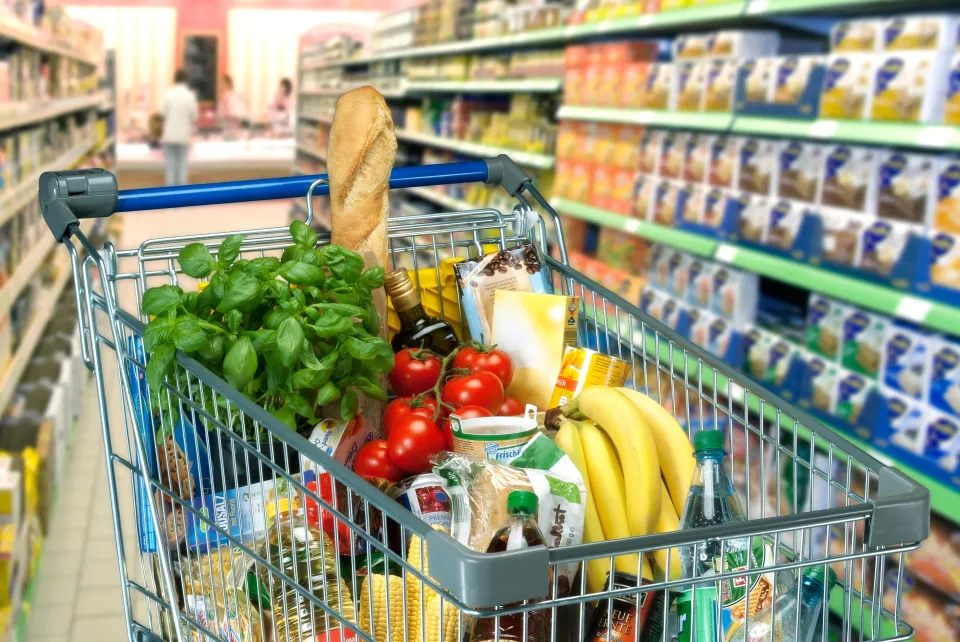

UK food prices are still rising in 2026, but the picture is far more uneven than the headline inflation rate suggests.
The latest Office for National Statistics data shows food and non-alcoholic beverage inflation at 1.3% in August 2026, unchanged from July. Food prices nevertheless increased by 0.4% during August alone.
Supermarket-level data tells a different part of the story. Which?’s latest tracker recorded 2.4% annual supermarket food inflation across the three months to the end of August, while individual categories such as fish were rising much faster.
At the same time, the Food & Drink Federation expects food and non-alcoholic drink inflation to reach 3.9% by December 2026. That is a forecast rather than a certainty, but it means shoppers and food businesses could face renewed price pressure before Christmas.
Key Facts
| Measure | Latest figure | Period |
|---|---|---|
| UK CPI inflation | 3.1% | August 2026 |
| UK CPIH inflation | 3.3% | August 2026 |
| Food & non-alcoholic beverage inflation | 1.3% | August 2026 |
| Monthly food-price increase | 0.4% | August 2026 |
| Which? supermarket food inflation | 2.4% | Three months to August |
| Worldpanel grocery inflation | 2.3% | Four weeks to 6 September |
| FDF December 2026 food-inflation forecast | 3.9% | Forecast |
Sources: ONS, Which?, Worldpanel by Numerator and Food & Drink Federation.
Table of Contents
- What is happening to UK food prices in 2026?
- Are UK food prices actually falling?
- Which food prices are rising fastest?
- Why is fish becoming more expensive?
- Which supermarkets have seen the biggest price increases?
- Are own-label foods still cheaper?
- Why could food inflation rise again before Christmas?
- What does this mean for UK shoppers?
- What does it mean for food manufacturers and retailers?
- What could happen to UK food prices in 2027?
- Key takeaways
- Frequently asked questions
What is happening to UK food prices in 2026?
The simplest answer is that food-price inflation is currently relatively low, but prices are not broadly falling.
ONS data shows food and non-alcoholic beverage inflation at 1.3% in August 2026. That means the average price level measured by this category was 1.3% higher than a year earlier. It does not mean the average supermarket shop became 1.3% cheaper.
This distinction matters.
Inflation measures the rate at which prices change. It does not measure whether prices have returned to the levels seen before the major food-price increases of 2022 and 2023.
The latest supermarket data also shows that the headline figure hides significant differences between individual products.
Which? found supermarket food inflation of 2.4% over the three months to the end of August, with fish prices rising much faster than the overall grocery basket.
Why can food inflation be low while shopping still feels expensive?
Because a lower inflation rate does not reverse previous price increases.
If a product rose from £1 to £1.20 and then increased by another 2%, it would cost £1.224.
The inflation rate has fallen substantially compared with the earlier shock, but the original price increase remains embedded in the price level.
The UK Government’s Food Security Report has previously documented the scale of the earlier shock. Food and non-alcoholic beverage prices increased by 31.6% between January 2021 and August 2024, while food inflation reached a 45-year high in March 2023.
That historical increase helps explain why shoppers can experience high grocery bills even when current annual inflation appears modest.
Which food prices are rising fastest?
The biggest increases are not evenly distributed across the supermarket.
Which?’s August 2026 supermarket tracker found the following annual inflation rates:
| Food category | Annual inflation |
|---|---|
| Fish | 11.9% |
| Energy drinks | 4.9% |
| Water | 3.6% |
| Fizzy drinks | 3.4% |
| Cakes and cookies | 3.3% |
| Biscuits | 3.1% |
| Fresh fruit | 3.0% |
| Milk | 3.0% |
| Vegetables | 2.9% |
| Chilled ready meals | 2.5% |
| Yoghurts | 2.4% |
| Cereals | 2.0% |
| Meat | 1.0% |
| Chocolate | 1.1% |
| Cheese | 0.1% |
| Butters and spreads | -0.5% |
These figures cover August 2026 and are based on Which?’s supermarket inflation tracker.
The variation is significant.
A shopper buying fish, fresh produce and some drinks could therefore experience a very different price increase from someone whose basket contains more meat, cheese, butter and spreads.
Why is fish becoming more expensive?
Fish was the fastest-rising food category in Which?’s latest supermarket tracker, with prices up 11.9% year on year in August.
The wider UK food system is exposed to a combination of international supply, energy, transport and production pressures.
The Government’s Food Security Report identifies climate change, geopolitical instability, supply-chain disruption and input costs as continuing risks to the UK’s food system. It also notes that the UK is highly dependent on imports for fruit, vegetables and seafood.
This makes imported and supply-sensitive food categories particularly important when assessing future price movements.
The August ONS data also shows that transport costs were rising much faster than food inflation overall. Motor-fuel prices were 23.0% higher year on year in August, creating another potential cost pressure for businesses that transport food around the country.
However, it would be wrong to attribute the price of an individual food category to one factor alone. Retail prices are affected by multiple stages of the supply chain.
Which supermarkets have seen the biggest price increases?
Which?’s August 2026 data shows substantial differences between supermarket inflation rates.
| Supermarket | Three-month annual inflation | August annual inflation |
|---|---|---|
| Asda | 2.8% | 4.1% |
| Sainsbury’s | 3.6% | 3.3% |
| Tesco | 3.6% | 3.1% |
| Waitrose | 3.0% | 3.1% |
| Morrisons | 1.2% | 1.7% |
| Ocado | 1.4% | 1.7% |
| Lidl | 0.3% | 0.4% |
| Aldi | -0.5% | -0.4% |
Source: Which? Supermarket Inflation Tracker.
But this table should not be interpreted as a ranking of the cheapest supermarkets.
Inflation measures the change in prices, not the absolute price of a basket.
A supermarket with lower inflation can still have higher prices for particular products than another retailer.
Which? explicitly makes this distinction in its methodology.
Are own-label foods still cheaper?
Own-label products remain an important part of the UK’s response to higher food costs, but the latest inflation data shows that different own-label ranges are moving differently.
Which?’s August data found:
| Product range | Annual inflation |
|---|---|
| Standard own-label | 3.4% |
| Premium own-label | 3.3% |
| Branded | 2.2% |
| Budget own-label | 0.6% |
The three-month figures were 3.4% for standard own-label, 3.2% for premium own-label, 2.2% for branded and 1.9% for budget own-label.
This suggests that shoppers looking for lower-cost options cannot simply assume that every own-label range is experiencing the same price trend.
The exact price paid still depends on the retailer, product and promotions.
Why could food inflation rise again before Christmas?
There are several reasons to watch the final months of 2026.
Energy costs
Food manufacturing is energy-intensive.
Factories use energy for processing, refrigeration, heating, drying and other production processes. Transport and storage also depend heavily on energy.
The FDF says rising energy costs are one of the factors behind its latest food-inflation forecast.
Ingredient costs
Manufacturers are also exposed to agricultural commodity prices.
Changes in the cost of crops, livestock feed and other ingredients can eventually feed through the supply chain.
Extreme weather
Drought and other extreme weather conditions can affect crop yields and agricultural commodity markets.
The FDF identifies drought in the UK and Europe and El Niño as risks to its food-inflation outlook.
IGD has also identified vegetables, potatoes and fruit as categories exposed to availability pressures following the UK’s hot and dry summer.
Transport and logistics
Higher fuel and logistics costs can increase the cost of moving ingredients and finished products.
ONS reported motor-fuel inflation of 23.0% in August 2026.
Labour and operating costs
Food businesses also face domestic operating costs, including labour, packaging and other expenses.
The FDF includes labour, packaging and regulatory costs among the factors in its latest forecast.
Is UK food inflation expected to rise before Christmas?
The Food & Drink Federation expects it to rise, but this should be treated as a forecast rather than a guaranteed outcome.
Its September 2026 forecast puts food and non-alcoholic drink inflation at 3.9% in December 2026, compared with 1.3% in August according to ONS data. It forecasts an average of 2.8% across 2026.
The FDF says the timing of price increases has been affected by manufacturers’ energy hedging, retailer competition and pressure on household budgets.
Those factors can delay the point at which higher production costs reach supermarket shelves.
The forecast therefore describes a possible later and longer inflation cycle, rather than a prediction that supermarket prices will suddenly jump by the same amount in December.
What does this mean for UK shoppers?
For consumers, the biggest lesson is that there is no single UK food-price trend.
Different products are experiencing very different movements.
A household buying large quantities of fish may experience a substantially different change in its grocery bill from one buying more products whose prices have remained relatively stable.
The same applies to supermarkets.
Aldi’s August food-price inflation was negative in Which?’s tracker, while Asda’s was 4.1%.
Promotions, loyalty schemes, pack sizes and product substitutions can further change the final amount paid at the checkout.
Should shoppers expect food prices to fall?
There is currently no evidence that UK food prices are broadly returning to pre-2022 levels.
Instead, the evidence points towards slower price growth combined with continued variation between products.
That distinction is particularly important for household budgeting.
What does this mean for UK food businesses?
Food manufacturers and retailers are facing a difficult balancing act.
Higher input costs can put pressure on margins, but passing all of those costs directly to consumers can reduce demand or make products less competitive.
The FDF says intense competition among more than 12,000 food and drink businesses can limit manufacturers’ ability to pass higher costs through immediately.
Retailers also compete heavily on price.
That competition can help restrain supermarket inflation, but it does not eliminate higher costs throughout the supply chain.
For Britain’s food industry, the important issue is therefore not simply whether inflation is high or low.
It is where the cost pressure is appearing and how quickly it is being transmitted through the supply chain.
Could UK food prices become a bigger issue in 2027?
The FDF’s current forecast suggests that pressure could continue beyond 2026.
It expects food and non-alcoholic drink inflation to average 5.5% in 2027, with a potential peak of 6.4% in July 2027.
That is a forecast, not an official prediction by the UK Government or ONS.
Actual inflation could be lower or higher depending on energy prices, commodity markets, weather, geopolitical developments, retailer competition and consumer demand.
The Government’s wider food-security analysis also highlights climate change, supply-chain resilience and geopolitical risks as factors that could affect UK food availability and prices over the longer term.
What should shoppers watch between now and Christmas?
Five indicators are particularly useful:
- The next ONS food-inflation release
- Supermarket inflation trackers
- Fish, fruit, vegetables and dairy prices
- Energy and transport costs
- Industry forecasts for the food manufacturing sector
The next ONS consumer-price release is scheduled for 21 October 2026, covering September data.
That release will provide the next official test of whether food-price inflation is beginning to accelerate.
Key Takeaways
- UK food and non-alcoholic beverage inflation was 1.3% in August 2026.
- Food prices nevertheless increased 0.4% during August.
- Which? recorded 2.4% supermarket food inflation over the three months to August.
- Fish was the fastest-rising food category in Which?’s tracker, at 11.9% year on year in August.
- Butter and spreads recorded a 0.5% annual decline.
- Asda had the highest August supermarket inflation in Which?’s tracker at 4.1%.
- Aldi recorded -0.4% annual inflation in August.
- Worldpanel reported grocery inflation of 2.3% in the four weeks to 6 September.
- The FDF forecasts food inflation could reach 3.9% by December 2026.
- That forecast should not be confused with an official ONS forecast.
- Lower food inflation does not mean that grocery prices have returned to pre-2022 levels.
- The next major official data point is the ONS September inflation release on 21 October 2026.
Conclusion
The UK’s food-price story in 2026 is no longer simply about runaway inflation.
It is about uneven inflation.
The latest ONS figures show relatively modest annual food inflation of 1.3%, but supermarket-level data reveals much larger increases for some products. Fish prices, for example, were rising at almost 12% annually in Which?’s August tracker, while butter and spreads were falling.
At the same time, the FDF expects food inflation to accelerate towards the end of the year, reaching 3.9% in December in its latest forecast.
For consumers, the practical message is straightforward: the headline inflation rate does not tell the whole grocery story.
The most useful indicators are the products actually being bought, the supermarket being used, and how prices change over time.
For Britain’s food industry, the bigger question is whether energy, commodity, climate and logistics pressures continue feeding through the supply chain.
The next ONS release on 21 October should provide an important indication of whether the late-2026 food-price pressure identified by industry forecasters is beginning to appear in official consumer-price data.
Key facts to feature prominently
1. Official food inflation: 1.3% in August 2026.
2. Monthly movement: Food and non-alcoholic beverage prices increased 0.4% in August.
3. Supermarket inflation: 2.4% over the three months to August according to Which?.
4. Fastest category: Fish, 11.9% in August.
5. FDF forecast: 3.9% by December 2026.
6. Worldpanel: 2.3% grocery inflation in the four weeks to 6 September.
FAQ
1. Are UK food prices going up in 2026?
Yes. Food prices are still rising overall, although the rate of increase is much lower than during the 2022–23 food-price shock. ONS recorded food and non-alcoholic beverage inflation of 1.3% in August 2026.
2. What is the UK food inflation rate in 2026?
The latest official ONS figure is 1.3% for August 2026 for food and non-alcoholic beverages.
3. Are supermarket prices falling in the UK?
Not generally. Supermarket food inflation remained positive in Which?’s August tracker, although the rate varied considerably between supermarkets and individual categories.
4. Which food is rising fastest in the UK?
Fish recorded the highest inflation among the 20 categories tracked by Which? in August 2026, at 11.9% year on year.
5. Which supermarket had the highest food inflation in August 2026?
Which?’s August tracker recorded the highest annual supermarket inflation at Asda, at 4.1%.
6. Which supermarket had falling food prices?
Which?’s tracker recorded annual food-price inflation of -0.4% at Aldi in August 2026. This measures price change, not whether Aldi was necessarily the cheapest supermarket overall.
7. Will UK food prices rise before Christmas 2026?
The Food & Drink Federation forecasts food and non-alcoholic drink inflation could reach 3.9% in December 2026. This is an industry forecast, not a guaranteed outcome.
8. Why are UK food prices still high?
Food prices reflect many factors, including energy, ingredients, labour, transport, packaging, weather, international supply chains and retailer competition. The UK’s Food Security Report identifies supply-chain resilience and climate-related risks as longer-term concerns.
9. Does lower food inflation mean food is getting cheaper?
No. Lower inflation means prices are rising more slowly. It does not mean prices automatically return to their previous level.
10. When is the next UK inflation report?
The next ONS consumer-price release is scheduled for 21 October 2026 and will cover September 2026.

