

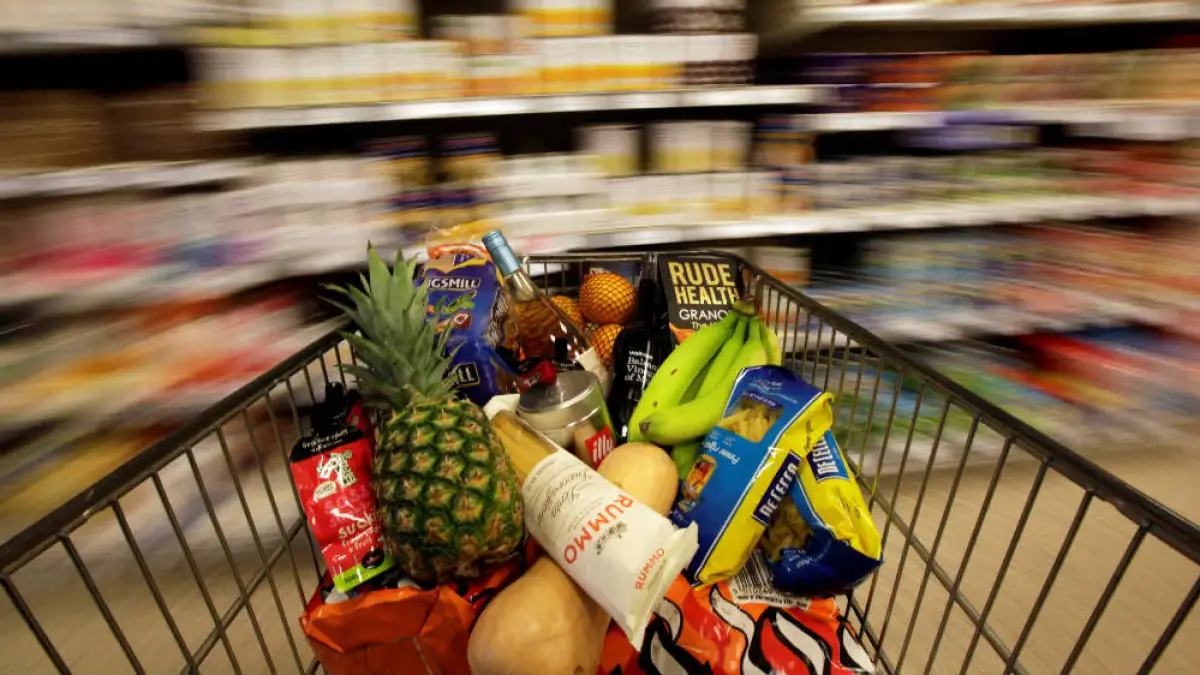

From supermarket prices and school meals to sugar taxes, food advertising and recycling, a series of government policy changes are reshaping the UK food landscape.
Some measures are already in force. Others have been announced for the future, while several remain subject to consultation or further government decisions.
For consumers, the challenge is understanding what each change actually means.
The policy landscape is also not uniform across the UK. Some measures apply throughout the United Kingdom, while others are specific to England or are being implemented through separate arrangements in Scotland, Wales and Northern Ireland.
This guide brings together the most important confirmed food policy developments affecting UK consumers in 2026 and beyond.
Table of Contents
- Why UK food policy matters to consumers
- Food prices remain a major household concern
- Soft Drinks Industry Levy changes planned for 2028
- Deposit Return Scheme preparations continue
- Free school meal eligibility expands in England
- School food standards are under review
- New rules on less healthy food advertising
- Updated Nutrient Profiling Model published
- Farming Roadmap 2050 sets out England’s long-term food strategy
- What these policies mean for UK consumers
- Key takeaways
- Expert and industry perspectives
- Conclusion
Why UK Food Policy Matters to Consumers
Government food policy affects far more than what appears on a supermarket shelf.
It can influence:
- the price of food and drink;
- how products are advertised;
- which children qualify for free school meals;
- how drinks packaging is recycled;
- how food is produced;
- how the UK prepares for future supply risks;
- and how healthier eating is encouraged.
Some policies affect consumers directly. For example, wider free school meal eligibility can reduce food costs for qualifying families.
Other policies work indirectly. A tax on certain drinks is paid by producers and importers, but companies may respond through reformulation or pricing changes.
This makes the distinction between government policy, industry response and consumer impact particularly important.
Food Prices Remain a Major Household Concern
The latest official inflation data show that the pace of food price increases has slowed.
According to the Office for National Statistics, food and non-alcoholic beverage prices were 1.7% higher in June 2026 than a year earlier. The category also recorded a 0.2% monthly fall.
Overall UK consumer price inflation was 2.6% in the 12 months to June 2026.
However, slower inflation does not mean that food prices have returned to their previous levels.
Inflation measures the rate at which prices are changing. When food inflation falls, prices may still remain significantly higher than they were several years earlier.
That difference helps explain why food affordability remains a concern.
The Food Standards Agency’s latest consumer tracking data found that 91% of respondents were concerned about food prices in March 2026. A further 23% said they were worried about whether they or their household could afford food in the following month.
What does this mean for households?
For many consumers, food policy is being judged against a simple question:
Will this policy make everyday food more affordable, more expensive or have no immediate effect on household budgets?
The answer varies considerably depending on the measure.
Soft Drinks Industry Levy Changes Planned for 2028
One of the most significant recent food policy announcements came from HM Revenue & Customs in July 2026.
Under the announced changes, the Soft Drinks Industry Levy threshold is planned to fall from 5g of sugar per 100ml to 4.5g per 100ml from 1 January 2028.
The government also plans to remove the current exemption for certain:
- milk-based drinks with added sugar;
- milk-substitute drinks with added sugar.
Open-cup drinks, such as drinks purchased in cafés, remain outside the levy.
A technical consultation on the changes is open until 6 September 2026.
What is the Soft Drinks Industry Levy?
The Soft Drinks Industry Levy is a tax on manufacturers and importers of certain drinks containing added sugar.
The policy was designed partly to encourage manufacturers to reduce the amount of sugar in their products.
The tax is not directly charged to consumers at the till as a separate line item. However, businesses may respond to the levy through:
- reformulation;
- changes to product ranges;
- pricing decisions;
- changes to pack sizes.
The effect on consumers will therefore depend partly on how manufacturers and retailers respond.
Deposit Return Scheme Preparations Continue
The planned Deposit Return Scheme will eventually change the way consumers buy and return certain drinks containers.
Under the scheme, consumers will pay a refundable deposit on eligible single-use drinks containers. The deposit can be reclaimed when the container is returned through the approved system.
The planned launch date for England and Northern Ireland is 1 October 2027. Separate national arrangements apply across the UK’s devolved administrations.
HMRC published VAT provisions for statutory Deposit Return Schemes on 13 July 2026.
Under the proposed arrangements:
- producers and importers will not account for VAT on DRS deposits;
- the scheme administrator will account for VAT;
- VAT will apply to deposits that are not returned to consumers.
What will the scheme mean for shoppers?
The most visible change will be at the point of purchase.
Consumers buying eligible drinks will pay the product price plus a deposit. When the container is returned, the deposit can be recovered.
The scheme is intended to increase the collection and recycling of drinks containers.
However, consumers will need to understand the difference between:
- the price of the drink;
- the refundable deposit;
- and the process for returning the container.
Free School Meal Eligibility Expands in England
One of the most direct food affordability measures affecting families is the expansion of free school meal eligibility in England.
From the start of the 2026–27 academic year, all children in households receiving Universal Credit will be eligible for free school meals, regardless of household earnings, subject to the relevant application and verification arrangements.
The Department for Education has also confirmed the permanent extension of eligibility for certain children in households with no recourse to public funds, subject to income thresholds.
Additional funding has been made available through the Free School Meals Expansion Grant for the 2026–27 academic year.
Why is this important?
School meals represent a regular household cost.
For eligible families, free school meals can reduce the amount spent on packed lunches and other weekday food costs.
The policy also has a nutritional dimension because school meals are provided within the relevant school food standards framework.
The expansion applies to England, and should not be described as a single UK-wide change.
School Food Standards Are Under Review
England’s school food standards are also being reviewed.
The government launched a consultation on 13 April 2026 to update the legislative framework governing school food.
The existing Requirements for School Food Regulations date from 2014. The consultation argued that the framework should be reviewed to reflect changes in dietary advice and the modern school food environment.
The consultation closed on 12 June 2026, with the government response expected in September 2026.
What could change?
The consultation covers the legislative framework for school food standards.
The eventual government response could affect:
- school menus;
- caterers;
- food suppliers;
- the nutritional composition of school meals;
- and how schools apply food standards.
Until the government publishes its response, the final changes should not be assumed.
New Rules on Less Healthy Food Advertising
Restrictions on advertising less healthy food and drink came into force on 5 January 2026.
The framework includes:
- a 9pm television watershed for covered less healthy food and drink advertising;
- restrictions on paid-for online advertising;
- an exemption for certain brand advertising under the regulations.
The restrictions are designed to reduce children’s exposure to advertising for less healthy food and drink products.
Why does this matter to consumers?
Advertising influences how products are presented and promoted.
The rules affect the marketing environment surrounding products classified as less healthy under the relevant regulatory framework.
This may affect:
- television advertising;
- online campaigns;
- digital advertising;
- promotional strategies used by food and drink brands.
The policy is therefore focused less on banning products and more on changing how certain products can be marketed.
Updated Nutrient Profiling Model Published
The Department of Health and Social Care published the Nutrient Profiling Model 2018 on 27 January 2026.
The model is designed to classify foods and drinks according to their nutritional composition.
However, an important distinction must be made.
The government states that the updated model is not yet applied to policy.
A consultation on applying the updated model to advertising and promotion restrictions was launched and closed on 25 March 2026.
Why is the model important?
Nutrient profiling can be used to distinguish between products according to their nutritional composition.
That classification can then potentially inform policies relating to:
- advertising;
- promotions;
- public health;
- food marketing.
The future policy implications will depend on government decisions about how the updated model is applied.
Farming Roadmap 2050 Sets Out England’s Long-Term Food Strategy
DEFRA published Farming Roadmap 2050: Growing England’s Future on 24 June 2026.
The roadmap sets out a long-term vision for English farming, with a focus on:
- profitability;
- productivity;
- sustainability;
- resilience.
The government states that farmers produce around 65% of the nation’s food and manage around 70% of England’s land.
The roadmap covers areas including:
- agricultural productivity;
- soil health;
- water management;
- environmental schemes;
- resilience;
- long-term farming support.
Why does farming policy matter to shoppers?
Food production policy can affect the resilience of the wider food system.
Issues such as:
- extreme weather;
- water availability;
- soil quality;
- farm profitability;
- domestic production;
can influence the UK’s future food supply.
The Farming Roadmap is therefore a long-term policy rather than an immediate supermarket price measure.
UK Food Policy Is Not the Same Across All Four Nations
One of the most important points for consumers is that food policy is not always UK-wide.
Some measures apply across the United Kingdom.
Others are specific to England.
Different administrative arrangements also exist for Scotland, Wales and Northern Ireland.
Examples include:
| Policy | Main coverage |
|---|---|
| Less healthy food advertising restrictions | UK-wide framework |
| Soft Drinks Industry Levy | UK tax framework |
| Free school meal expansion | England |
| School food standards consultation | England |
| Farming Roadmap 2050 | England |
| Food and You 2 survey | England, Wales and Northern Ireland |
| Deposit Return Scheme | Separate national arrangements |
Readers should therefore check the relevant government guidance for their nation before assuming that an England policy applies throughout the UK.
What These Policies Mean for UK Consumers
Taken together, the current policy changes show several broad trends.
1. Food affordability remains central
Official data show that food inflation has eased, but food prices remain a major concern.
The FSA’s consumer data show that affordability remains a significant issue for households.
2. Government policy is focusing more heavily on food marketing
The restrictions on less healthy food advertising represent a significant change to the marketing environment.
3. Sugar reduction remains a long-term policy objective
The planned changes to the Soft Drinks Industry Levy are intended to widen the range of products potentially subject to the levy.
4. Food packaging is becoming more visible to shoppers
The Deposit Return Scheme will introduce a refundable deposit mechanism for eligible drinks containers.
5. School food remains a major policy area
The expansion of free school meals and the review of school food standards could affect millions of children and families in England.
6. Food supply resilience is receiving greater attention
The Farming Roadmap 2050 places long-term emphasis on the resilience and productivity of English agriculture.
Key Takeaways
- UK food policy is changing across taxation, advertising, school meals, packaging and agriculture.
- Food and non-alcoholic beverage inflation was 1.7% in the year to June 2026.
- The FSA found that 91% of respondents were concerned about food prices in March 2026.
- The Soft Drinks Industry Levy threshold is planned to fall to 4.5g of sugar per 100ml from 2028.
- England’s free school meal eligibility is expanding from the 2026–27 academic year.
- Less healthy food advertising restrictions took effect on 5 January 2026.
- A Deposit Return Scheme is planned for England and Northern Ireland from October 2027.
- England’s school food standards are under review, with a government response expected in September 2026.
- The Farming Roadmap 2050 sets out a long-term strategy for English farming.
- Not every food policy applies equally across England, Scotland, Wales and Northern Ireland.
Expert Insight
The main challenge for consumers is that food policy is increasingly being shaped by several objectives at the same time.
The government is seeking to improve public health, support food affordability, reduce packaging waste and strengthen long-term domestic food production.
These objectives can sometimes overlap, but they can also create tensions.
For example, a policy designed to encourage healthier products may lead manufacturers to reformulate products or change prices. A packaging deposit can encourage recycling, but it also introduces a new payment and refund process for shoppers.
The most important point for consumers is therefore to distinguish between:
- a policy that is already in force;
- a policy that has been announced for a future date;
- a consultation;
- and a proposal that has not yet become law.
That distinction is particularly important in 2026, as several major food-policy changes are at different stages of development.
Conclusion
The UK’s food policy landscape is undergoing significant change.
For consumers, the effects will not come from one single regulation. Instead, households will encounter a series of changes covering food affordability, school meals, advertising, sugar levels, packaging and farming.
The most immediate issues include continuing concern about food prices, the expansion of free school meals in England and new restrictions on less healthy food advertising.
Further changes are on the horizon.
The planned Deposit Return Scheme is expected to change how shoppers pay for and return certain drinks containers, while the planned Soft Drinks Industry Levy changes could affect a wider range of products from 2028.
At the same time, England is reviewing its school food standards and pursuing a long-term farming strategy through the Farming Roadmap 2050.
The key message for UK consumers is simple: food policy is becoming increasingly visible in everyday life.
Understanding which changes are already in force, which are planned and which remain under consultation will be essential as the UK’s food system continues to evolve.
FAQ
What food policy changes are affecting UK consumers in 2026?
Major developments include expanded free school meal eligibility in England, restrictions on less healthy food advertising, changes planned for the Soft Drinks Industry Levy, preparations for a Deposit Return Scheme and the review of school food standards.
Are UK food prices falling?
Food price inflation has slowed, but that does not necessarily mean prices have returned to earlier levels. ONS data showed food and non-alcoholic beverage prices were 1.7% higher in June 2026 than a year earlier.
What is changing with the UK sugar tax?
From 1 January 2028, the Soft Drinks Industry Levy threshold is planned to fall from 5g to 4.5g of sugar per 100ml. Certain exemptions for milk-based and milk-substitute drinks with added sugar are also planned to be removed.
When will the UK Deposit Return Scheme start?
The planned scheme launch date for England and Northern Ireland is 1 October 2027. Separate national arrangements apply in other parts of the UK.
Will shoppers get money back for returning drinks containers?
Under the planned Deposit Return Scheme, consumers will pay a refundable deposit on eligible single-use drinks containers and can reclaim the deposit when the container is returned through the approved system.
Who qualifies for free school meals in England from 2026?
From the 2026–27 academic year, children in households receiving Universal Credit will be eligible for free school meals regardless of household earnings, subject to the relevant application and verification arrangements.
Are junk food advertising restrictions already in force in the UK?
Restrictions on advertising covered less healthy food and drink came into force on 5 January 2026. The rules include a 9pm television watershed and restrictions on paid-for online advertising.
Is the new Nutrient Profiling Model already being used in UK food policy?
The updated Nutrient Profiling Model 2018 was published in January 2026, but the government states that it is not yet applied to policy.
What is the Farming Roadmap 2050?
Farming Roadmap 2050 is a long-term strategy for English farming focused on profitability, productivity, sustainability and resilience. It was published by DEFRA on 24 June 2026.
Do all food policies apply across the UK?
No. Some policies are UK-wide, while others apply only to England or are managed through separate arrangements in Scotland, Wales and Northern Ireland.
Why are food prices still a concern if food inflation is falling?
Food inflation measures the rate at which prices change. A lower inflation rate means prices are rising more slowly, not necessarily that they have returned to previous levels. The FSA continues to record significant concern about food affordability.
Use up and down arrow keys to resize the meta box pane.

