


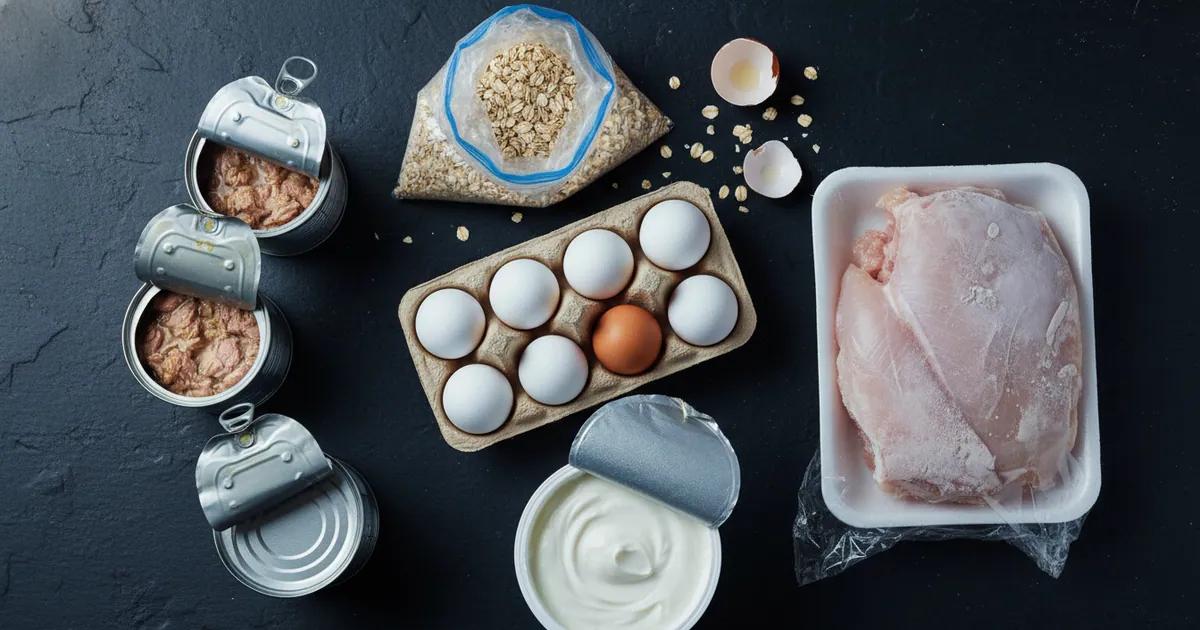
Protein does not have to mean expensive chicken breasts, premium yoghurt or specialist protein products. For UK shoppers looking to make their food budget go further, dried lentils, beans, eggs, chicken, tinned fish and some dairy foods can all contribute to affordable, protein-rich meals.
The important question is not simply which food has the lowest price tag. It is how much protein you get for the money, how much you need to buy, and whether the ingredient works for the meals you actually eat.
A 2026 price comparison published by The Vegan Society, covering nine major UK supermarket chains and using prices collected in April 2026, found that several everyday plant-based foods were inexpensive per portion. Its examples included peanut butter at 11p, baked beans at 14p, dried split red lentils at 17p and kidney beans at 23p per portion. These are historical comparison figures, not guaranteed prices today.
For shoppers, the most useful strategy is to compare unit prices, check protein information on food labels and build meals around a mixture of affordable ingredients. This guide explains how to make those comparisons without confusing the cheapest food with the cheapest source of protein.
Key facts
- Dried lentils and beans: Worth comparing because dry pulses can provide several meals from one pack.
- Tinned beans and chickpeas: Convenient options that are ready to use after draining and rinsing where appropriate.
- Eggs: A versatile source of protein for breakfasts, lunches and quick dinners.
- Chicken and tinned fish: Useful animal-protein options, although value depends on the product, pack size and edible portion.
- Dairy foods: Milk, yoghurt and some higher-protein dairy products can contribute protein, but their value varies considerably.
- Best comparison method: Calculate the price of a consistent quantity of protein rather than comparing pack prices alone.
- Price caveat: Supermarket prices, promotions, pack sizes and loyalty-card offers change. Treat dated comparisons as snapshots, not live quotes.
Table of contents
- What is the cheapest source of protein?
- Which protein foods offer good value?
- How to compare the cost of protein
- Cheap protein sources compared
- Affordable high-protein meal ideas
- How to save money on protein shopping
- How much protein do adults need?
- Frequently asked questions
What is the cheapest source of protein?
Dried lentils are one of the strongest candidates for an affordable protein staple, while beans, eggs and some own-brand meat, fish and dairy products can also offer good value. The cheapest option depends on current supermarket prices, serving sizes and the amount of protein in the food.
The Vegan Society’s April 2026 UK supermarket research found inexpensive portions of dried split red lentils, baked beans, kidney beans and peanuts. Separately, UK protein-cost comparison tools illustrate why prices should be calculated against a fixed amount of protein rather than judged by pack price.
There is no single food that is always cheapest at every supermarket. A promotion, larger pack or different product specification can change the ranking.
For an everyday shop, start by comparing dried pulses, tinned beans, eggs and the own-brand versions of foods you already eat. Then check whether meat, fish or dairy offers better value for your particular meals.
Which protein foods offer good value in UK supermarkets?
1. Dried lentils
Dried red, green and brown lentils are useful cupboard staples. They can be cooked in soups, curries, stews, pasta sauces and other meals.
Their main practical advantages are that they are sold dry, can be stored in the cupboard and can be incorporated into recipes with vegetables, grains and seasonings. Red lentils are particularly useful for dishes in which a softer texture is desirable.
Compare the price per kilogram of dried lentils, but remember that dry lentils absorb water during cooking. For a meaningful cost-per-protein calculation, use the nutrition value and weight for the same preparation state.
2. Beans and chickpeas
Kidney beans, chickpeas, butter beans and other pulses can be used in salads, wraps, soups, curries and stews.
Tinned varieties save preparation time. Dried varieties may cost less per usable quantity, but they require soaking or cooking according to the product instructions. The cheapest option on the shelf is not necessarily the cheapest option for someone who has limited time, cooking facilities or storage.
Compare drained weight when buying tinned pulses. The liquid in a tin contributes to its total weight but is not the same as the edible portion of beans used in a recipe.
3. Eggs
Eggs are convenient for quick meals and can be boiled, scrambled, poached or added to dishes.
Compare pack sizes and the shelf-edge unit price. Different egg sizes and production systems are not directly equivalent, so take welfare and production labels into account rather than treating the lowest price as the only consideration.
A larger box may cost less per egg, but it only saves money if you can use the eggs before their quality deteriorates and follow the storage instructions.
4. Chicken
Chicken breast, thigh meat and other cuts can contribute substantial protein to meals. However, the most expensive cut is not automatically the best choice.
Compare the price per kilogram alongside the amount of edible meat, any bones or skin, and the protein value for the product as sold. Frozen products and larger packs may be worth considering if you have sufficient freezer space and can use them safely.
Chicken also works well in meals with beans, vegetables, rice or pasta, allowing a smaller amount of meat to contribute to a balanced dish.
5. Tinned fish
Tinned tuna, sardines and other fish can be convenient cupboard ingredients for sandwiches, pasta, salads and quick meals.
Check the drained weight, the type of fish, the packing liquid and the price per usable quantity. A multipack may offer a lower unit price, but compare equivalent products rather than assuming all tins contain the same amount of fish.
Fish choices also differ nutritionally. Check the product label and follow NHS advice on recommended fish consumption, particularly where advice differs by fish species or life stage.
6. Milk, yoghurt and other dairy foods
Milk and yoghurt can contribute protein as part of breakfast, snacks or meals. Products marketed as high-protein yoghurt may contain more protein per serving, but they can also cost more.
Compare the price per 100g of protein if nutrition information is available, and consider whether a standard yoghurt, milk or another dairy food meets your needs at a lower cost.
Cheese also contains protein, but it should not be assumed to be the cheapest option simply because it has a relatively high protein content. Price, portion size, calories and saturated fat all matter when deciding how to use it.
7. Peanuts and peanut butter
Peanuts and peanut butter can contribute protein and are useful additions to porridge, toast, sauces and snacks.
They are energy-dense foods, so they are not directly interchangeable with lean meat, pulses or lower-fat dairy when comparing calories and protein. Check ingredients and labels, particularly for added salt or sugar, and avoid peanuts if you have an allergy.
8. Tofu and other soya foods
Tofu can provide a useful alternative to meat in stir-fries, curries, noodle dishes and traybakes.
Compare the price per pack, protein per 100g and number of portions the pack provides. Firm tofu and silken tofu have different textures and uses, and their protein contents can differ. Check the specific product label instead of assuming all tofu is nutritionally identical.
How to compare the cost of protein
The most useful comparison is the cost of obtaining the same quantity of protein from different foods.
Use this calculation:
Cost per 100g of protein = (price paid ÷ total grams of protein in the pack) × 100
For example, imagine a product costs £1.20 and contains 60g of protein in the whole pack.
£1.20 ÷ 60 × 100 = £2.00 per 100g of protein.
This is an illustrative calculation, not a current supermarket price.
You can also compare the cost of a 20g or 30g protein portion, but use the same target for every food and clearly state the assumptions. For dry foods, cooked foods and tinned products, make sure the price and nutrition values refer to consistent quantities and preparation states.
Why price per kilogram is not enough
One kilogram of chicken, one kilogram of yoghurt and one kilogram of cooked beans do not contain the same amount of protein. Their water content, edible portion and nutritional composition differ.
Price per kilogram remains useful for comparing similar products, such as two packs of lentils. For comparing different types of food, cost per gram of protein provides a more meaningful measure.
It is still only one measure of value. Calories, fibre, convenience, taste, food waste, dietary requirements and the rest of the meal matter too.
Cheap protein sources compared
The following table summarises how to assess common options. It deliberately avoids claiming a current national price ranking because prices vary by store, pack and date.
| Food | What to compare | Useful meal applications |
|---|---|---|
| Dried lentils | Price per kilogram dry; protein per 100g dry | Soup, curry, stew, pasta sauce |
| Tinned beans | Drained weight; price per usable portion | Chilli, salad, wraps, baked potatoes |
| Chickpeas | Drained weight; protein and price | Curry, salads, hummus |
| Eggs | Price per egg; size and production method | Breakfast, omelettes, fried rice |
| Chicken | Price per edible quantity; cut and pack size | Traybakes, curries, rice dishes |
| Tinned fish | Drained weight; type of fish | Sandwiches, pasta, salads |
| Milk and yoghurt | Protein per serving; price per 100g protein | Breakfast, snacks, sauces |
| Peanuts and peanut butter | Price per portion; protein and energy | Porridge, toast, sauces |
| Tofu | Protein per 100g; pack price | Stir-fries, curries, noodles |
For a publishable live-price league table, FoodFuture should collect prices from a consistent basket of comparable products at named retailers, record the date and distinguish standard prices from loyalty-card promotions. Nutrition values should be taken from the relevant product labels or a suitable food-composition database.
Affordable high-protein meal ideas
A useful budget meal does not need to rely on a single ingredient providing all its protein. Combining ingredients can help stretch a food budget and create more varied meals.
Lentil and vegetable curry
Cook lentils with onion, tomatoes, spices and vegetables, then serve with rice. Adjust the lentil quantity to the number of portions and the desired consistency.
Beans on toast
Serve baked beans on wholemeal toast for a quick meal. Check the nutrition label and consider the meal as a whole rather than judging it on protein alone.
Egg and vegetable fried rice
Use cooked rice, vegetables and egg to make a quick meal. Handle, chill and reheat cooked rice safely, following Food Standards Agency advice.
Chickpea wraps
Combine chickpeas with vegetables, seasoning and a suitable dressing in a wrap. Add yoghurt or another ingredient if desired.
Chicken and bean chilli
Combine a modest quantity of chicken with beans, tomatoes and vegetables. This can stretch the meat across more portions without relying on meat as the only protein source.
Tuna pasta
Mix tinned tuna with pasta, vegetables and a tomato-based or yoghurt-based sauce. Compare drained tuna prices and use the amount that fits your budget.
Peanut sauce with tofu or vegetables
A peanut-based sauce can add flavour to noodles and vegetables, with tofu providing another protein source if desired. Remember that peanut butter is energy-dense and check for allergens.
Budget tip: Cost recipes using the actual pack prices and quantities used. Divide the total ingredient cost by the number of portions, and label any cupboard ingredients or leftovers excluded from the calculation.
How to save money on protein shopping
- Compare unit prices. Look at the shelf label rather than judging a product by its pack price.
- Check own-brand products. Compare nutrition, ingredients and usable quantity rather than assuming branded products offer better value.
- Use dried pulses where practical. They can be useful for batch cooking, provided you follow preparation and cooking instructions.
- Plan meals around overlapping ingredients. Lentils, beans, eggs and frozen vegetables can feature in several different dishes.
- Freeze suitable portions. Follow food-safety guidance for cooling, storing, thawing and reheating.
- Watch loyalty-card conditions. Record whether a price requires a membership or app and whether the offer is temporary.
- Avoid buying protein products automatically. Powdered supplements and specialist snacks are not essential for everyone; compare ordinary foods first.
- Reduce waste. A slightly more expensive food that gets eaten may represent better household value than a cheaper product that goes unused.
How much protein do adults need?
The UK adult reference intake commonly used in government nutrition guidance is approximately 0.75g of protein per kilogram of body weight per day. Individual needs can vary with age, health, pregnancy, activity and other circumstances, so this figure should not be treated as a personalised prescription.
For most shoppers, the sensible goal is to eat a varied diet with suitable protein sources rather than assume that more protein is always better.
People with medical conditions that affect protein requirements should seek advice from an appropriate healthcare professional or registered dietitian.
The bottom line
Dried lentils, beans, chickpeas and other everyday ingredients are worth comparing first when building an affordable protein shopping list. Eggs, chicken, tinned fish, dairy foods and tofu can also be useful choices, depending on current prices and how you plan to use them.
The best-value option is the food that supplies the protein you need at a reasonable cost, fits your meals and is actually eaten rather than wasted. Compare like-for-like unit prices, check product labels and treat any published supermarket ranking as valid only for the prices and date on which it was collected.
Editorial note: Supermarket prices change frequently. Before publication, verify any numerical price comparison against the original research or a dated retailer basket. Do not describe historical figures as today’s cheapest prices.
Frequently asked questions
1. What is the cheapest source of protein in the UK?
Dried lentils and other pulses are strong budget options, although the cheapest source varies with supermarket prices, pack sizes and the quantity of protein in each product. Compare cost per 100g of protein rather than pack price alone.
2. Are lentils cheaper than chicken for protein?
They can be, depending on the products and quantities compared. Dried lentils are often economical cupboard staples, while chicken prices vary by cut and pack size. Compare equivalent quantities of protein using consistent dry, raw or cooked measurements.
3. Which supermarket has the cheapest protein foods?
There is no single supermarket that is always cheapest for every protein food. Aldi, Lidl, Tesco, Asda, Morrisons and other retailers have different prices, promotions and pack sizes. Compare unit prices for the specific products you intend to buy.
4. Are eggs a good-value source of protein?
Eggs are a versatile source of protein and can be used in many inexpensive meals. Compare the price per egg, size, pack quantity and production method, as these factors affect value.
5. Are tinned beans and chickpeas good protein sources?
Yes. Tinned beans and chickpeas provide protein and fibre and can be added to soups, curries, salads and other meals. Check the drained weight when comparing tins and follow the label’s preparation advice.
6. How can I calculate the cost of protein in a food?
Divide the price of the pack by the total grams of protein it contains, then multiply by 100. For example, a £1.20 product containing 60g of protein costs £2 per 100g of protein. This is an illustrative calculation, not a current shelf price.
7. Can I get enough protein without buying protein powder?
Many people can meet their protein needs through ordinary foods such as pulses, eggs, dairy, fish, meat, tofu and other soya foods. Individual requirements vary, and supplements are not automatically necessary.
8. What are the cheapest high-protein meals?
Potential budget meals include lentil curry, beans on toast, egg fried rice, chickpea wraps, chicken and bean chilli, and tuna pasta. Actual cost depends on ingredient quantities, current prices and how many portions the recipe makes.
9. Are plant-based protein foods cheaper than meat?
Some plant-based foods, particularly dried pulses, can be inexpensive compared with meat. However, the result depends on the products and serving sizes being compared. Check both price and protein content before deciding.
10. How much protein do adults need each day in the UK?
A commonly used UK reference intake for adults is approximately 0.75g of protein per kilogram of body weight per day. Needs vary, so this general reference should not replace individual clinical advice.

