


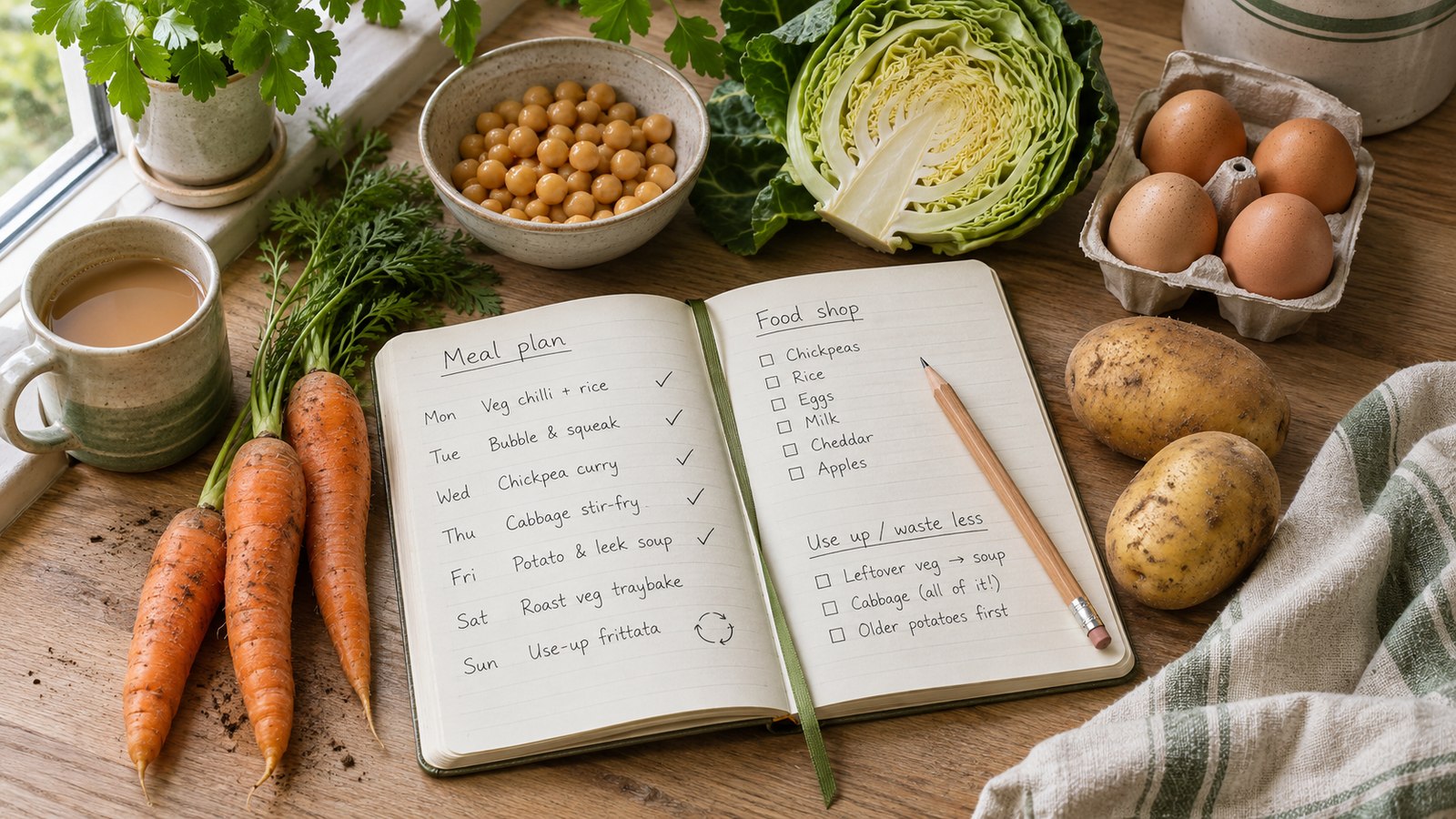
To plan a weekly food shop and waste less, check what you already have, choose four dinners that share ingredients and write down only what you need to buy. Leave one evening free to use up what’s left. That gives you room for a late finish at work, a change of plans or a dinner that feeds you twice.
What to check before your weekly food shop
Start with the fridge drawer. A few carrots and half a cabbage are easy to overlook when you’re thinking about what to buy. Write down what you want to use first, then check the freezer for a meal that could cover a busy evening. Finally, look through the cupboards for tins and other ingredients that could turn the fresh food you already have into dinner.
Check your calendar while you’re making the list. If two people are eating on Monday and only one is home on Tuesday, shop for those portions. When an ingredient appears in more than one meal, add up how much you need before choosing a pack size. For more ideas, see Less Waste’s guide to meal planning and shopping lists.
A four-dinner plan for your weekly food shop
Say you already have carrots, half a cabbage, tinned chickpeas and a portion of chilli in the freezer. Assuming you have basic seasonings and stock, the main things to buy are wraps, potatoes and eggs. Here’s how those ingredients could work across the week.
| Day | Dinner | What it uses |
|---|---|---|
| Monday | Chickpea and crunchy slaw wraps | Chickpeas, grated carrot, shredded cabbage and wraps |
| Tuesday | Jacket potatoes with chilli | Potatoes and the chilli already in the freezer |
| Wednesday | Potato and cabbage hash with eggs | Potatoes, cabbage and eggs |
| Thursday | Carrot and chickpea soup with toasted wraps | Carrots, chickpeas and wraps |
| Friday | Use-up night | Ingredients still on hand or a simple meal from the cupboard |
If Wednesday turns into a late night, swap two meals or use the flexible evening early. For other ingredients you can use across several dinners, see FoodFuture’s guide to affordable protein sources in UK supermarkets.
When is a bigger supermarket pack worth buying?
Look at the amount you’re likely to use as well as the price per kilogram. For example, if a 1 kg bag of carrots costs £1.20 and a 500 g bag costs 80p, the bigger bag is cheaper per kilogram. But if you only use 500 g and throw the rest away, you’ve spent an extra 40p. These are example prices.
The same calculation works for bags of salad and bunches of fresh herbs. Before buying a larger pack, decide which other meal will use it and when you’ll make that meal.
Frequently asked questions
How many dinners should I plan for a weekly food shop?
Four dinners and one flexible evening are a practical starting point. Check how many people will be home each night and count any meals you already have in the freezer before writing your list. Richmond Council’s guide to reducing food waste also suggests leaving room for plans to change.
What should I do if my meal plans change midweek?
Move a meal that uses ingredients you need to use soon to the next evening you’ll be home. Keep a simple cupboard meal in mind for busy nights. If you’re planning around festive extras, see FoodFuture’s guide to freezing Christmas dinner leftovers.
How can I tell if I’m wasting less food?
Before your next shop, take a quick look at what’s still in the fridge. If you regularly have half a bag of salad left or find potatoes you forgot you bought, change that one purchase next week. Buy a smaller pack or give the ingredient a place in a second meal.

